https://www.petdoors.com/blogs/dog.atom PetDoors.com - PetDoors Blog 2025-12-29T13:47:00-08:00 PetDoors.com https://www.petdoors.com/blogs/dog/indoor-cat-health-guide-dog-proof-home 2025-12-29T13:47:00-08:00 2025-12-30T10:17:55-08:00 Indoor Cat Health & Happiness (And How to Resign as Door Attendant) Brandy Isom Indoor cats are essentially tiny, unemployed roommates with sharp weapons. To keep them from turning your sofa into confetti, they need three things: routine, movement, and a space where they can judge you in peace.

Here is the no-nonsense guide to keeping them healthy and solving the "I’m tired of letting the cat in and out 40 times a day" problem.

The 60-Second "Vibe Check" (Health Scan) This isn't a vet visit, just a quick scan to make sure your roommate is operating within normal parameters. Do this while you’re petting them:

  • Ribs: You should feel them with light pressure, but you shouldn't see them.

  • Coat: Dandruff is out. Glossy is in.

  • The Litter Box: If they’re straining, it’s not a power move—it’s a medical emergency. Go to the vet.

  • The Rule: If something looks weird or painful, close Google and call the professionals.

Enrichment: Give Them a Job Most "behavioral issues" are actually just boredom. Your cat isn't plotting your demise (probably); they just have too much energy.

  • Hunt Play: 10 minutes with a wand toy. Let them actually "kill" the toy at the end. It’s good for their ego.

  • Go Vertical: Cats like looking down on you. Literally. Clear a shelf or get a tree.

  • Foraging: Make them work for dinner. A puzzle feeder is great for keeping them busy while you watch Netflix.

The "High-ROI" Move: Stop Being a Doorman We’ve heard the feedback loud and clear: You don't want a "smart" door that requires a firmware update just to let the cat pee. You want something that works.

cats can avoid a lot of health problems by staying active

Setup 1: The "Dog-Proof" Zone (Litter & Food) The Problem: Your dog treats the litter box like an all-you-can-eat buffet ("kitty roca"—gross, we know) or inhales the expensive cat food. The Fix: A simple interior cat door on the laundry room or closet. What you need:

  • A Simple 4-Way Lock: In, Out, Locked, Open. No Wi-Fi, no apps, no nonsense. Just a mechanical latch.

  • A Quiet Flap: If the door makes a loud CLACK, the cat will suspect it’s a trap. Look for brush seals.

Setup 2: The "Safe Room" The Problem: Multi-pet chaos. The cat needs a break from the Golden Retriever’s toxic positivity. The Fix: Give the cat a VIP lounge. A simple door installation allows them to escape the chaos and nap in a sunbeam undisturbed.

Setup 3: The Great Outdoors (Controlled) The Problem: You want them to have fresh air, but you also want them to come home. The Fix: A Catio or enclosed run. The Gear: If you do go through an exterior wall, this is the one time tech might help. If you have neighborhood raccoons, a microchip door ensures you aren't hosting a trash panda dinner party. Otherwise? A solid weather-sealed flap is all you need.

The Installation: Yes, You Have to Cut a Hole We know. Taking a jigsaw to your door feels like a commitment.

  • The Golden Rule: Measure the cat, not the vibes. Measure their shoulder width and the distance from the floor to their belly. That’s your cut height.

  • Hollow Doors: Most interior doors are hollow. It’s fine, just be prepared to frame it out or use a door with a "self-framing" tunnel.

  • Panic Button: If you’re staring at the saw and sweating, send us a photo of your door. We’ll tell you exactly what fits so you don't end up with a drafty hole and a confused cat.

]]>
https://www.petdoors.com/blogs/dog/bringing-home-new-dog 2025-03-11T15:00:00-07:00 2025-03-11T15:20:31-07:00 Bringing a New Dog Home Nick Pullano Congratulations! Bringing home a new dog—whether a playful puppy, a shelter adoptee, or a rescue—will change your life for the better.

Yes, there will be chewed shoes, late-night barking, and occasional accidents. But you’ll also have a wagging tail to greet you, a loyal companion by your side, and endless unconditional love from day one.

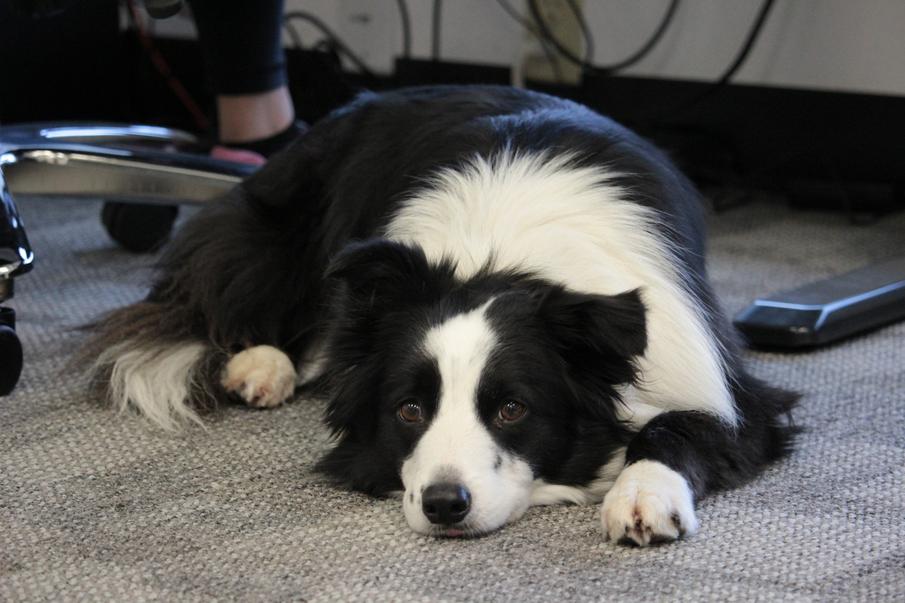
border collie lying down looking at camera

When preparing for a puppy, or any new addition to your family, it's important to know how to get a dog that suits your lifestyle. If you're being proactive and are still thinking about what pet to choose, consider finding out what dog breeds best match your personality?

Predicting a puppy’s future behavior can be challenging, while adopting an older shelter dog increases the chances of finding a temperament that suits your lifestyle.

A few chewed shoes in exchange for lifelong companionship? A fair trade. But bringing home your first dog is a big adjustment—and so is figuring out what you actually need. Wee-wee pads, Nylabones, Kongs, chew toys, food bowls, dog beds… where do you start? Here’s a quick guide to help you prepare.

Bringing Home a Puppy:

#1 Plan Family Introductions

Introduce your dog to its new home gradually, especially if you have other pets or young children. A new environment can be overwhelming, so allow time for adjustment.

Never force interactions between pets, as this can create stress and resentment. Instead, encourage positive introductions when they’re ready. Let them sniff and observe each other naturally. After a couple of minutes, separate them to prevent tension from escalating.

Watch for signs of aggression, such as bared teeth, growling, or stiff body language. If hostility arises, separate them immediately and try again later.

#2 Set Expectations Early

Interrupt any bad behaviors early to let them know that these are not acceptable behaviors. Show them that you make the rules, or they will take advantage of there being none. Jumping on visitors, bite when taking treats, and stealing food from the table should be seen as off-limits. If you want to know more about dog training, read about How to Train a Dog Not to Bite Strangers.

With multiple pets, resources like food bowls, toys, and sleeping areas can trigger rivalry, even among the most docile animals. Establish clear boundaries for each pet’s belongings and spaces to prevent conflicts. If you don’t have time for training, consider hiring a professional trainer or enrolling your dog in training classes to ensure good behavior.

#3 Develop a Routine

Like with many things in life, consistency is key. Establishing a clear routine for your pet early on can make it easier for them to learn acceptable behaviors. Change is difficult and inconsistency can be overstimulating for a new pet. Be sure that walks, outings, feedings, and playtime all happen during generally the same hours and that they are getting plenty of it to eliminate bad behavior. Taking a dog out for a walk at the same time every day will get a dog used to it, and they will be less likely to be energetic afterward.

#4 Be Patient

Things will not always happen overnight. Having realistic expectations will help keep the introductory process in perspective. You can’t force your pet to like your home immediately, and you can’t force your older pet(s) to like your newer one right away. New puppy care is not unlike caring for a human puppy! Follow the tips, be consistent, and be patient and you will slowly see how your pet becomes adjusted to your home and will view it as a safe place.

#5 Install a Dog Door

Installing a dog door is a great way to give your dog and you more freedom. Not only does it increase the quality of life for your pet but it also lifts the burden from you to let your pet in an out all the time. There are lots of different factors that go into installing the correct pet door such as size, the location of the door (sliding door, screen door, wall door), and functionality (Electronic, Locking, etc...). Introducing your pup to a pet door is also a helpful way to facilitate potty training and making sure you have the correct pet door is crucial. Take a look at these Pet Door Training Tips for more information on the benefits of pet doors.

#6 Food and Water

Make sure that you have a designated area where your pet will have access to their food and water. While you may want to limit your pet’s access to food at certain times, it is important that the time and place is consistent. Feeding them at a specific time and place will help them get a routine and know where to expect their food to be. Dogs can get aggressive if this routine is disrupted.

#7 Leashes

Retractable leashes are handy for trained dogs, but if you’re working on leash-training, you’ll need a standard (non-retractable) leash. The reason? On retractables, dogs learn that they’ll get to go farther and faster if they start pulling. On a standard leash, pulling gets them nowhere. Excellent for dogs just starting to be leash trained, they will try to leave your side but quickly learn that is not acceptable behavior. As they learn to walk with you on a standard leash you can then switch to a retractable as they gain your trust.

#8 The Crate Debate

If you’re going to crate-train your dog, it’s better to do it from the get-go. Contrary to popular belief, crate-training doesn’t mean locking your pet up for hours on end; rather, it gives your place a den-like space to go and be comfortable when you need to secure your dog (when you have dog-shy guests or service professionals over at your house, getting your house cleaned or painted, etc.). Instead of panicking at the thought of being in an enclosed space, dogs feel safe and secure in their “den". It can also help establish a routine place to sleep, and limit accidents in your home.

#9 Toys

Finally, remember that toys aren’t a luxury; they’re a necessity. Just like humans require stimulation. Imagine being pent up in a room with no iPhone, no computer, no TV, no books, nothing. You’d go crazy, right? Dogs are social creatures too and they need to occupy themselves just as much as you do. Puppies have natural chewing instincts, so be sure to stock up on some chewing toys or risk that puppy taking out its urge to chew on your furniture.

#10 A Few Final Tips on Buying Pet Supplies for Your Puppy

Owning a dog is an investment and therefore it's important to look for products that will grow with your puppy. Remember, that it’s not a good idea to take your puppy into the pet store with you. Your puppy’s immune system isn’t fully developed yet, so he won’t be equipped to handle the germs that adult dogs carry.

As soon as your puppy is fully immunized, your new furry companion will be ready to go out and enjoy the world with you. Now that your new family member has arrived, what next? After adjusting to new surroundings, friends, and family, puppies will soon need to be transitioned into a housebreaking routine. Read on to learn about the best puppy tips for the first week and learn how to take care of a puppy's potty training!

House Training Tips

Consistency and patience are two key qualities necessary to successfully house-train a puppy. Each puppy is different, but adopting these general techniques is sure to assist in the housebreaking process. Larger dogs may adapt to their routine quickly, while smaller dogs generally take longer to be house trained. Puppies can generally hold their bladder one hour for every month of age. This means that a three-month-old puppy can hold its bladder for approximately three hours.

Regular Routines

Puppies adapt best to a routine. It is best to have designated times for puppies to sleep, play, eat, and go out. Having a regular feeding schedule will help to establish consistency, as well as predetermined times to take your puppy outdoors. Puppies should go out promptly after eating, drinking, and any kind of exciting activity (such as playing).

Make sure to also initiate taking your puppy outside every night before bed, as well as every morning when you wake up. Taking your puppy out frequently will ensure minimal accidents. It is important to take your puppy outdoors at least every two hours, as well as any other time that you notice your puppy indicating they need to go out.

Training Time

Pick a spot outside where you want to train your puppy to go. Using a short phrase such as ‘go potty’ or ‘outside’ will help establish recognition between the phrase and action. This also reinforces consistency in the house training routine. Make sure to stand quietly and don’t do anything that may startle or distract your puppy. Additionally, playing or going for a walk before your puppy goes can be a major distraction. Focus on the training and your puppy will soon learn to focus as well.

Remember Rewards

Always positively respond to your puppy after he or she goes outdoors. This can either be through praise or with a treat. The most important aspect of this step is to remember to respond with an immediate reward so that the reward is positively associated with the behavior. Puppies are easily distracted, and won’t associate a delayed reward with previous behavior.

Watch Your Puppy

Close observation of your puppy can be another way to pro-actively accelerate the training process and prevent potential accidents. Often puppies will begin to show some sort of indication that they need to go out (whether it’s standing at the door, circling, sniffing the ground, or barking). With careful supervision, it becomes easy to pick up on these signs and actively address the need for your puppy to go outdoors.

When you have to leave your puppy

Obviously, at times you will not be at home and therefore unable to watch your puppy. When this does occur, it is most effective to keep puppies in a small area, such as a pen or a crate. Puppies naturally don’t ‘go’ in the same area that they rest or sleep. Therefore, confining a puppy to a smaller area where they have a bed and enough room to comfortably stand and lie down will encourage puppies to wait until they are able to go outdoors.

black dog standing with leash on

When used correctly, crates can be very beneficial in training puppies and a puppy will often quickly adapt to viewing a crate as a type of den or sleeping area. If you prefer to not utilize a crate for house training, small pens or dog-proof baby gates can be used to block off areas such as the laundry room or family room. Most importantly, make sure as soon as you arrive home you promptly take your puppy outdoors, and follow the steps previously outlined to establish a routine.

Remember: young puppies cannot be expected to hold their bladder for more than a couple hours at a time (at most!) so if you are going to be away from home for a long period, consider arranging for a neighbor or pet sitter to come and take your puppy out.

Paper Training

Another option for puppies that will be indoors for longer periods of time is paper training. Paper training can be an effective way to teach puppies to go indoors while still preventing accidents. Using newspapers, or specially designed puppy pads can be used to teach your puppy paper training indoors. Keep in mind that simultaneously training your puppy to use papers and go outdoors can become confusing, and will require extra time and patience for success.

What to do in case of an accident

Accidents are inevitable with a new puppy. If you catch them in the act, firmly say "no," then quickly take them outside. If they finish there, reward them immediately.

If you miss the accident, don’t punish—yelling will only cause confusion. Instead, clean the area thoroughly with a water-and-vinegar solution or a commercial cleaner to eliminate lingering scents and prevent repeat incidents. Stick to your regular house-training routine to reinforce good habits.

Pet Doors

As we mentioned before, there are so many benefits to having a pet door installed in your home. Introducing your puppy early on can make all the difference, facilitating quick learning of how to use it. Dog doors provide freedom and flexibility, benefiting both pets and owners.

Caring for a dog can be challenging, but we hope this guide helps your new pet settle in smoothly. Have any additional tips for puppy care? Let us know!

]]>
https://www.petdoors.com/blogs/dog/top-dog-kennel-doors 2023-12-05T11:25:39-08:00 2023-12-05T11:25:39-08:00 Budget-Friendly Picks: Top Dog Kennel Doors Under $500, Tested and Reviewed Mia Daniele The right dog kennel door is paramount for any pet owner or shelter looking to provide the best for their pets. A good pet door affects not only the safety and security of our pets, but also their long-term comfort and well-being. 

Factors like durability, size, and weather proofing play crucial roles in ensuring your dogs can move freely and safely through the kennel door. However, it can be challenging to balance those factors with your budget.

That’s why we’ve compiled a list of affordable kennel options that do not compromise on quality. We offer a comprehensive look at the best kennel doors available for under $500 that deliver on safety, durability, and all-weather suitability

dog poking head out of dragon flap pet door for doors

Factors To Consider Before Buying a Kennel Door For Your Dog

Size and Breed Compatibility:  

The first step in selecting the right kennel door is ensuring it fits your dog's size and is appropriate for their breed. You need to measure your dog's height and width to determine the door size needed. You can learn how by following our measuring guide

Using accurate measurements is crucial for your pet's comfort and safety, as a door too small can cause injury, while one too large might not provide the security needed. 

You should also consider the breed's characteristics, like their tendency to grow or their physical agility. Installing your kennel pet door lower to the ground will ensure that your dog can continue using it even as their mobility decreases with age. 

Material Durability:  

Kennel doors are made from a variety of materials, each with its own set of advantages and drawbacks. 

Plastic frame dog doors, for instance, are lightweight and often more affordable but may not withstand heavy usage or extreme temperatures. Aluminum frame dog doors, on the other hand, offer durability and strength, yet they might be more costly. 

Assess your pet's behavior and the typical wear and tear they might inflict on the door to decide on the best material.

Security Features:

The safety of your pet and home should be a top priority. Look for doors with robust security features like sturdy locks or electronic keys. These elements prevent unwanted entry and ensure that your pet stays safe inside. Some advanced models might also offer customized access settings, enhancing security and convenience. 

However, electronic pet doors cost more on average than traditional pet doors. 

Weather Resistance: 

Weatherproofing is vital, especially in areas prone to extreme weather conditions. Your pet door should be able to withstand elements like rain, wind, and temperature fluctuations to ensure your pet's comfort and the door's longevity. 

Look for features like energy-efficient flaps and weather seals that help maintain the kennel's internal environment.

Ease of Installation:

Consider whether the kennel door requires professional installation or if it's a do-it-yourself friendly model.

Some doors come with detailed guides and can be easily fitted into existing spaces, while others might need specialized tools or expertise. Knowing this beforehand can save time and additional costs.

If you need assistance installing your pet door, you can check out our registry of independent installers.

Warranty and Support:

Finally, the presence of a warranty and reliable customer support is crucial. 

A warranty provides peace of mind, ensuring that any defects or issues can be addressed without incurring extra costs. Effective customer support is also essential for resolving any queries or problems that may arise during installation or use. These aspects are indicative of the manufacturer's confidence in their product and their commitment to customer satisfaction.

Our Top Picks for Budget-Friendly Kennel Dog Doors

Our top picks for kennel dog doors were picked based on their size ranges, durability, weather resistance, ease of installation, and warranty policies. 

Magnador Dog Doors for Doors & Kennels

The Magnador Dog Doors offer a practical and cost-effective solution for pet owners looking for reliable pet access in various settings such as doors, kennels, and more. With options suitable for both dogs and cats, these doors are available in small, medium, and large sizes, catering to a broad range of pet sizes. The design features a chew-resistant, rigid polypropylene flap and a simple 2-way locking system, enhancing both durability and security.

Specifications:

  • Sizes Available: Small, Medium, Large
  • Materials: Chew-resistant, rigid polypropylene flap
  • Weatherproofing: Standard and heavy-duty magnets for improved insulation
  • Colors: White and Black (Bronze)

Pros and Cons:

Pros:

  • Versatile installation options
  • Weather-resistant with heavy-duty magnet option
  • Chew-resistant material enhances durability
  • Easy to install with a simple locking system

Cons:

  • Some users reported gaps allowing bugs or lizards through
  • In hot climates, the plastic may expand, affecting the door swing
  • Rigid flap can chip or crack with heavy use

Price: starting at $39.99

Mason Company Pickwick Kennel Pet Doors

The Mason Company Pickwick Kennel Pet Door is a premium option designed for durability and versatility. Ideal for solid core doors and kennels, it features a cast aluminum frame and a polycarbonate flap, suitable for various dog sizes and compatible with additional locking mechanisms.

Specifications:

  • Size Options: Medium, Small Medium, Tall Large Plus, Tall Medium, Large, Tall Large
  • Materials: Cast aluminum frame, 1/4" thick clear polycarbonate flap
  • Weatherproofing: Suitable for four-season climates, wind-resistant
  • Compatibility: Works with Mason Guillotine Doors, suitable for wall installations

Pros and Cons:

Pros:

  • Durable and weather-resistant
  • Comfortable side-swinging design
  • Adjustable spring hinges for pet comfort
  • Chew-resistant flap
  • Suitable for a wide range of dog sizes

Cons:

  • Higher price point
  • May be noisy in quiet environments
  • Initial learning curve for pets
  • Does not include a locking cover

Price: starting at $329.99


Gun Dog Guillotine Pet Doors for Kennels

The Gun Dog Guillotine Pet Doors for Kennels is a versatile and robust solution suitable for a variety of installations, including kennels, doors, and walls. Designed with a durable aluminum frame and a frosted polypropylene panel, it ensures long-lasting performance and safety for pets.

Specifications:

  • Sizes: Medium/Large and XL
  • Materials: Aluminum frame, 3/8" thick polypropylene panel
  • Weatherproofing: High wind resistance, average insulation
  • Rail Height: 40" to 56", depending on the model

Pros and Cons:

Pros:

  • Accommodates a range of dog sizes
  • Easy installation in diverse materials
  • Compatible with various Gun Dog door models
  • Provides good wind resistance and insulation
  • Cost-effective for the quality offered

Cons:

  • Additional hardware like pulleys not included
  • Some installation adjustments may be necessary
  • Closing panel is not see-through and does not include a lock

Price: starting at $119.99


Dragon Pet Door for Doors

The Dragon Pet Door for Doors offers a cost-effective and efficient solution for pet owners, providing a safe and convenient way for pets to access the outdoors. It features a unique two-piece flap design for improved sealing and home insulation, making it ideal for various climates.

Specifications:

  • Color: White, Black, and Creame
  • Flap Sizes: Medium, Large
  • Flap Type: Single Flap, Double Flap
  • Material: UV-resistant polyolefin elastomer flap, thermoplastic cover
  • Door Compatibility: Fits standard doors 1-3/8" - 1-3/4" thick

Pros and Cons:

Pros:

  • Economical, suitable for small budgets
  • Strong magnets for sealing against harsh weather
  • Easy installation with clear instructions
  • Weather-resistant, durable construction
  • Good insulation for moderate climates, with upgrade options

Cons:

  • The magnetic strip on the flap can come off
  • Extra magnetic strip may reduce insulation if removed

Price: starting at $69.99

Installation Tips for Dog Kennel Doors

Installing a dog kennel door is a relatively simple process that can be done by most DIY enthusiasts. Here's a brief step-by-step guide:

Tools Required: 

  • Drill
  • Screwdriver
  • Jigsaw
  • Level
  • Tape measure
  • Pencil

Instructions: 

  1. Choose the installation location. The best place to install the kennel door is in a location that is easily accessible to your dog, but also out of the way of direct sunlight and rain.
  2. Mark the door opening. Use the kennel door template to mark the opening on the door. Make sure the opening is large enough for your dog to comfortably go through.
  3. Cut the door opening. Use a jigsaw to carefully cut the opening along the marked lines.
  4. Install the kennel door frame. Insert the kennel door frame into the opening and fasten it securely using the provided screws.
  5. Install the kennel door panel. Insert the kennel door panel into the frame and secure it using the provided latches.
  6. Test the door. Open and close the door to make sure it is working properly and that your dog can easily go through it.

Common Mistakes to Avoid

  • Not measuring the door opening correctly. This is the most common mistake made when installing kennel doors. Make sure to measure the opening carefully before you cut it.
  • Cutting the door opening too small. This will make it difficult for your dog to go through the door.
  • Not installing the kennel door frame securely. This could cause the door to fall out of the opening.
  • Not testing the door before you use it. This is important to make sure that the door is working properly and that your dog can easily go through it.

Maintenance Tips

Proper maintenance will extend the lifespan of your dog kennel door and keep it functioning smoothly. Here are some tips for cleaning and maintaining different types of doors:

Cleaning Routines

  • Plastic doors: Wash the door with soap and water using a soft sponge or cloth. Avoid using harsh chemicals or abrasive cleaners.
  • Metal doors: Wipe the door down with a damp cloth to remove dirt and debris. You can also use a mild metal polish to restore its shine.

Regular Checks

  • Inspect the door regularly for signs of damage, such as cracks, tears, or loose screws.
  • Check the hinges and latches to make sure they are working properly.
  • Test the door to make sure it is opening and closing smoothly.

Replacement Parts

If any parts of your dog kennel door are damaged, you can find replacements at our shop. Replacing parts is typically a straightforward process that you can do yourself.

Here are some additional tips for maintaining your dog kennel door:

  • Lubricate the hinges and latches regularly to keep them moving smoothly.
  • Keep the door clean and free of debris to prevent damage.
  • Store the door in a cool, dry place when not in use.

By following these maintenance tips, you can help ensure that your dog kennel door will last for years to come.

How We Tested The Kennel Dog Doors?

Our kennel dog door reviews are a comprehensive compilation of insights gathered from both customer feedback and in-house testing. We carefully analyze customer reviews from our website to understand the real-world experiences of dog owners with various kennel doors. 

Additionally, we conduct thorough testing in our office environment, utilizing our staff's office dogs to assess the functionality, durability, and dog-friendliness of each door. This dual approach ensures that our reviews provide a well-rounded perspective on the performance of different kennel doors.

Why Trust PetDoors.com?

PetDoors.com is dedicated to earning your confidence and exceeding your expectations. Here's what sets us apart:

  • Experience: We boast unrivaled expertise in pet doors, having served countless happy pet owners for years.
  • Honesty: Our reviews are based on real customer feedback and rigorous in-house testing with our office pups, ensuring unbiased and transparent information.
  • Commitment: Our passion for pets shines through in our comprehensive resources, expert advice, and unparalleled customer service.
  • Quality: We meticulously handpick our products, offering only those that meet our high standards for functionality, durability, and safety.

We understand that choosing the right dog kennel door is a critical decision. That's why we're here to guide you every step of the way, ensuring a fulfilling experience for you and your four-legged friend.

]]>
https://www.petdoors.com/blogs/dog/wifi-pet-door-review 2023-11-02T11:17:20-07:00 2023-12-07T12:22:17-08:00 High Tech Wifi Pet Door Review: The Best Wifi Pet Door For Your Buddy Mia Daniele Wifi enabled smart pet doors are a new and innovative way to keep your pet safe and happy. They allow your pet to come and go as they please without you having to open the door for them. This is especially convenient if you work long hours or travel frequently.

Smart pet doors offer a number of benefits over traditional pet doors such as safety, monitoring, and convenience.

Wifi pet doors can be programmed to only open for your pet's microchip or RFID collar. This prevents unwanted animals from entering your home, which makes them safer than average pet doors. 

They also allow you to use your smartphone app to check the status of your pet door and see when your pet comes and goes. This is a great way to make sure your pet is safe and sound, even when you're not home. 

For greater convenience, you can even control your wifi pet door with your smartphone app. This is great for letting your pet in when you're running late or if you have your hands full.

With greater safety and convenience, your wifi pet door will allow your pet to get more freedom and live a healthier lifestyle while cutting down on your stress levels. That's why we've decided to review one of the top wifi pet doors out there: the High Tech Power Pet Wifi Controlled Dog Door

Brief Overview of High Tech WiFi Pet Door

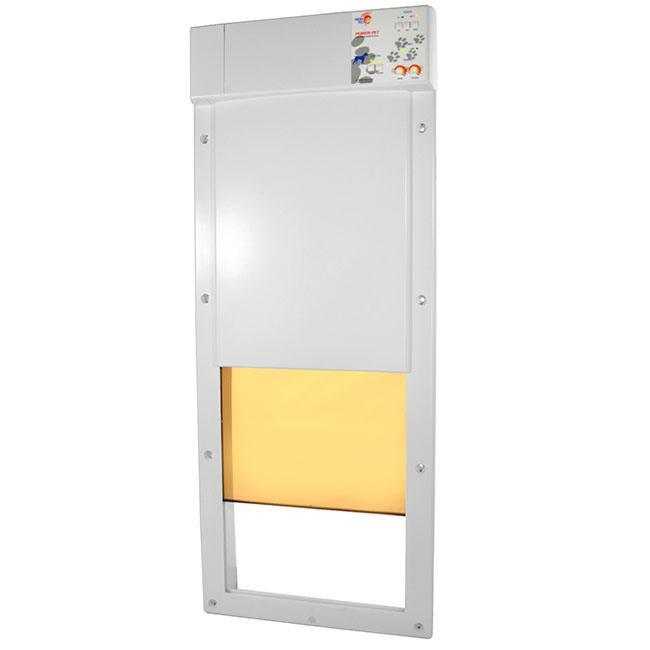
The High Tech Power Pet WiFi Pet Door revolutionizes pet access. From any internet or cell phone connection, you can operate the door, toggle sensors, utilize the hold open feature, and craft up to 20 tailored timers, dictating precise in-and-out schedules for your pet throughout the week.

Key Features:

  • Wifi connectivity: Control your pet door from anywhere in the world using your smartphone.
  • Automatic locking: The door automatically locks after your pet passes through to prevent unwanted animals from entering your home.
  • 4-way locking system: Choose from In Only, Out Only, Full Access, or Closed and Locked.
  • Dual powering system: The door can be powered by batteries or AC adapter, so you never have to worry about it running out of power.
  • Lightweight design: The door is made of durable lightweight materials, making it easy to install and use.
  • Automatic Safety Retract feature: The door flap automatically retracts when your pet passes through to prevent injuries.

What We Like:

  • The pet door is secure and reliable.
  • It’s easy to install into homes and for pets to use.
  • The advanced wifi connectivity for remote control is unlike anything else on the market. 
  • The automatic locking and 4-way locking system controls when pets can go in or out.
  • The dual powering system ensures the pet door will stay running in blackouts.
  • It’s designed to be lightweight, but still sturdy.
  • The Automatic Safety Retract feature prevents the flap from closing on your pet.

What We Don’t Like:

  • Some users have reported that the wifi connectivity can be unreliable.
  • The door flap can be noisy when it opens and closes.
  • The door is more expensive than some other pet doors on the market.

Price Range: Premium

Users Review:

  • "I love it. I don't worry anymore to open the door when my dog wants to go outside.” - Aron
  • “The Wi-Fi open/closing of the door seems to only work on your home Wi-Fi, it will not work on other Wi-Fi so I can’t control it from my Wi-Fi at work for example. The door works great. We’ve had it since July and love it. The dogs immediately learned how to use the door the first day it was installed. The battery in the collar finally needed to be replaced after about three months and dogs use the door constantly throughout the day. The only problem we had was at the beginning, the door would continuously open itself after trying to shut and the door would go up and down. Customer support was super helpful, turns out we had the screws in too tightly, once we loosened them a bit we have had no issues. I wish we had installed this door years ago because it has given us and the dogs so much for freedom.” -Alexandra

Best For:

  • Tech-savvy owners
  • Owners with pets that have special needs (e.g., elderly or disabled pets)
  • Owners with multiple pets
  • Owners who travel frequently or work long hours

Key Features Of High Tech WiFi Pet Door

Reliability: The High Tech Power Pet Door is a reliable pet door that uses ultrasonic pet collar key technology to ensure seamless pet access. It also has an automatic deadbolt locking system that activates as soon as the door is completely shut and a 4-way locking system that can be enabled for further control over your pet's access.

Security: The High Tech Power Pet Door is a secure pet door that uses ultrasonic pet collar key technology to prevent unwanted animals from entering. It also has a 4-way locking system that can be used to keep out strays and other critters. Additionally, the door has an automatic safety retract feature that reopens the door if it encounters an obstruction during closure.

App Features: The High Tech Power Pet Door has a smartphone controlled WiFi Pet Door that connects to your home's wifi and can be controlled remotely with an integrated smartphone app. With the app, you can set up to 20 custom timers to regulate your pet's access, receive alerts when your pet enters or exits the home, and monitor your pet's activity remotely.

Sensor System: The High Tech Power Pet Door uses ultrasonic pet collar key technology to detect your pet's presence. When your pet approaches the door, the ultrasonic sensor in the collar triggers the door to open automatically.

Durability and Weatherproofing: The High Tech Power Pet Door is made with a durable aluminum frame and a high-strength ABS flap. The flap is also lined with a series of magnets to hold it closed against strong winds and harsh weather conditions. The patio door model has energy-efficient Low-E, dual-pane glass.

Power Source: The High Tech Power Pet Door has a dual powering system that allows it to be powered by an outlet, backup battery, or fully battery-operated. This makes it a versatile option for any household.


Multiple Pets Allowed: The High Tech Power Pet Door can be programmed for up to 5 SmartKeys, which means that you can use it with multiple pets. This makes it a great option for households with multiple furry friends.

Size and Design: The High Tech Power Pet Door is available in medium and large sizes. It has a simple, modern design that will complement any home décor.

Overall: The High Tech Power Pet Door is a reliable, secure, and feature-rich pet door that is perfect for households with multiple pets. It is easy to install and use, and the smartphone app makes it easy to monitor and control your pet's access remotely.

Benefits For Pet Owners

The WiFi-enabled High Tech Power Pet Dog Door offers a number of benefits for pet owners, including:

  • Convenience: You can control the door remotely using the smartphone app, which means you can let your pet in or out even if you're not home. This is especially convenient if you work long hours or travel frequently.
  • Peace of mind: You can receive alerts when your pet enters or exits the home, so you always know where they are. This can be especially helpful if you have a senior pet or a pet with special needs.
  • Security: The door uses ultrasonic pet collar key technology to prevent unwanted animals from entering. This can help to keep your pet safe and prevent pests from getting into your home.
  • Flexibility: You can set up to 20 custom timers to regulate your pet's access. This allows you to give your pet more freedom during certain times of the day or night, such as when you're at work or asleep.
  • Durability: The door is made with durable materials and is weatherproof, so it can withstand even the harshest conditions.

Overall, the WiFi-enabled High Tech Power Pet Dog Door is a convenient, secure, and durable option for pet owners. It offers a number of features that can make your life easier and help to keep your pet safe.

Reviewing High Tech Wifi Pet Door vs Other Wifi Pet Doors

Category

High Tech Power Pet Wifi Enabled Pet Door

Petsafe SmartDoors Connected Pet Door

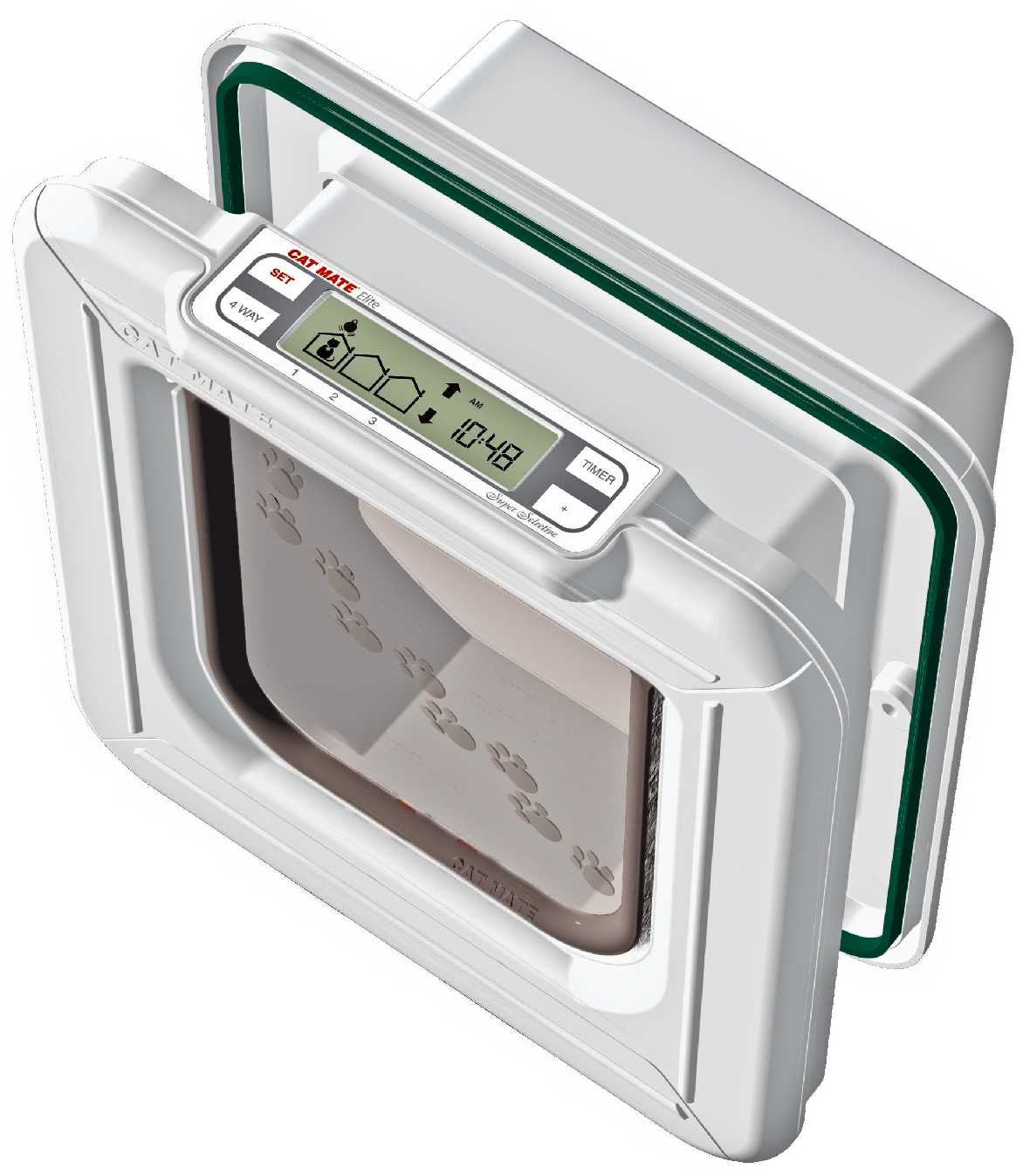
Cat Mate Elite 305 Super Selective Electronic Cat Door

Price

$$$

$$

$

Wifi Connectivity

Yes

Yes

No

Safety & Security

Ultrasonic collar key technology, 4-way locking system, automatic safety retract feature

Ultrasonic collar key technology, 4-way locking system

RFID collar key technology, timer control

Durability

Durable aluminum frame, high-strength ABS flap, magnets to hold flap closed

Durable plastic frame, ABS flap

Plastic frame, PVC flap

Ease of Installation

Medium

Easy

Medium

Power Source

Outlet, backup battery, or battery-operated

Outlet or battery-operated

Outlet or battery-operated

Aesthetic Design

Simple, modern design

Simple, functional design

Simple, classic design

Multiple Pets

Programmable for up to 5 Collar Keys

Programmable for up to 5 SmartKeys

Programmable for up to 30 RFID tags


Our Experts Recommendation

The High Tech WiFi Enabled Power Pet Door is a high-quality pet door that offers a number of features that make it a great choice for pet owners. It is easy to install and use, and the smartphone app makes it easy to monitor and control your pet's access remotely.

Here are some of the reasons why our team loves the High Tech WiFi Enabled Power Pet Door:

  • Convenience: You can control the door remotely using the smartphone app, which means you can let your pet in or out even if you're not home. This is especially convenient if you work long hours or travel frequently.
  • Peace of mind: You can receive alerts when your pet enters or exits the home, so you always know where they are. This can be especially helpful if you have a senior pet or a pet with special needs.
  • Security: The door uses ultrasonic pet collar key technology to prevent unwanted animals from entering. This can help to keep your pet safe and prevent pests from getting into your home.
  • Flexibility: You can set up to 20 custom timers to regulate your pet's access. This allows you to give your pet more freedom during certain times of the day or night, such as when you're at work or asleep.
  • Durability: The door is made with durable materials and is weatherproof, so it can withstand even the harshest conditions.

If you have a High Tech WiFi Enabled Power Pet Door, we encourage you to share your experience with us in the comments below. What do you like most about the door? What are any drawbacks? Would you recommend it to other pet owners?

]]>
https://www.petdoors.com/blogs/dog/rfid-cat-door 2023-09-26T08:56:35-07:00 2025-04-02T05:11:15-07:00 How to Choose the Right RFID Dog Door for Your Pet's Needs Mia Daniele The comfort, security, and convenience of your pets is paramount. With the advances in technology, pet doors have evolved from simple flaps to sophisticated, electronically controlled systems.

One of the most modern and secure technologies in this realm is the RFID collar tag system. Let's dive in to understand what it is, its benefits, and the recommended pet doors that employ this technology.

What is an RFID Collar Tag for Pet Doors?

RFID stands for Radio Frequency Identification. It's a technology that uses electromagnetic fields to automatically identify and track tags attached to objects.

For pet doors, these tags are usually placed on a pet's collar. When the pet approaches the door, the door reads the unique identification from the tag, and if it's recognized, the door will grant access. This ensures that only your pet (or pets) can use the door, keeping unwanted animals out.

Benefits of RFID Pet Doors

  • Security: With RFID doors, only pets with the correct tag can enter or exit. This keeps out stray animals or potential pests.
  • Convenience: No need for your pet to wait for you to open the door. They can come and go as they please, ensuring they're happy and active.
  • Safety: No more worrying about unwanted animals entering your home or potentially harmful encounters between your pet and a wild animal.

Recommended RFID Dog Doors

High Tech Power Pet Door Mount Dog Door (Original and WiFi):

Pioneering the new age of pet door solutions, the High Tech Power Pet Door Mount presents the perfect blend of convenience, security, and comfort. Available in two versions – the original and WiFi-enabled – this door guarantees effortless access for your furry companion. Employing ultrasonic collar key technology, the door senses your pet's proximity and automatically unlocks, eliminating any need for your pet to push the door.

A key highlight is the deadbolt locking system, enhancing home security once the door shuts. Its 4-way locking mechanism offers more tailored access control. For homes that may experience power outages, there's no need to worry. This door features a dual powering system; you can connect it to an outlet or use it battery-operated. Should you opt for the WiFi variant, your smartphone turns into a remote control, granting you the ability to set custom timers and monitor door activity.

The convenience does not stop there. Its lightweight design ensures a quiet operation, and the Automatic Safety Retract feature safeguards your pet by reopening the door upon sensing any obstructions during closure.

Cat Mate Elite 355 Chip & Disc Electronic Pet Door:

Taking security and convenience to the next level, the Cat Mate Elite 355 ushers in an era of exclusive home access for your feline friends. Whether using a microchip or the Elite I.D. Disc collar key, this door can cater to up to nine cats, giving you precise insights into the movements of three of them.

The inclusion of a timer control sets this pet door apart. With it, you can set specific times for access, ensuring your cat's safety during certain hours, such as nighttime. Its energy-efficiency focus ensures your home remains insulated, thanks to the weatherstripping-lined flap. The clear flap, made from rigid Polypropylene, guarantees easy passage, eliminating any hesitancy your pet might feel. Installing the Cat Mate Elite 355 is straightforward, fitting doors or walls up to four inches thick.

PetSafe Electronic Smart Door:

Embracing the marvels of RFID technology, the PetSafe Electronic Smart Door ensures your pet's freedom doesn't compromise home security. Tailored for hollow and solid core doors ranging from 1 1/2" to 2" thick, this door can accommodate up to five pets, each having its unique SmartKey collar for selective access.

Battery-operated with 4 D-Cell batteries, the hassle of frequent recharging or direct electricity dependency is eliminated. Whether you have a small pet or one that weighs up to 100 lbs, PetSafe caters to all with its two size options. Each purchase includes one RFID smart collar key, and if you have multiple pets, additional keys can be acquired separately. This door stands as a testament to the blend of technology and convenience, all geared towards ensuring a happier pet and a more secure home.

PetSafe SmartDoor Connected Pet Door:

Stepping into the realm of smart homes, the PetSafe SmartDoor Connected Pet Door adds a layer of convenience with its app-controlled features. By connecting to your home's Wi-Fi, this pet door offers you the luxury of controlling its settings remotely via a dedicated smartphone app. You can easily lock or unlock the door, set specific schedules for your pet's entry and exit, and even monitor their activities in real-time.

Its RFID technology ensures that only pets with the authorized collar tags can access the door. The beauty of this product lies in the blend of modern-day tech with the fundamental requirements of a pet door. For homes with power concerns, the door provides a dual powering mechanism, ensuring uninterrupted functioning. With its advanced features, it promises to redefine pet door experiences for modern homes.

Cat Mate Elite 305 Super Selective Electronic Cat Door:

Created with a feline-centric approach, the Cat Mate Elite 305 promises selectivity like no other. Employing advanced RFID technology, this door ensures that only cats with the programmed collar tags or embedded microchips gain entry. It's an excellent solution for households with multiple cats, allowing you to manage and monitor access for each individual cat.

Beyond its selectivity, the Cat Mate Elite 305 offers unique features like an in-built timer, which can be customized to regulate access times. If you prefer your cats to stay indoors during certain hours, this feature proves invaluable. Furthermore, its design focuses on energy efficiency, ensuring that no drafts enter your home, and optimal insulation is maintained. For cat owners looking to combine the latest technology with pet convenience, this door emerges as a top contender.

Choosing the right pet door is all about understanding your pet's needs and ensuring their safety and comfort. With the RFID technology, not only can you offer your pet the freedom to move in and out, but you can also do so with peace of mind, knowing that your home remains secure. Whatever door you decide upon, embracing this technology is certainly a step towards a futuristic, efficient, and pet-friendly home.

]]>
https://www.petdoors.com/blogs/dog/storm-door-pet-door-buy 2023-09-25T13:03:09-07:00 2024-03-25T20:57:19-07:00 Storm Doors with Dog Doors: A Perfect Solution for Your Pet's Safety and Comfort Mia Daniele

Most pet owners want their dogs to experience the simple joys of life: exploring the backyard, playing with fellow dogs, or digging up bones. However, in order to experience these things, your pet needs to be able to move in and out of the house whenever they please. 

Pet doors are the go-to solution for giving your pets more freedom. Many pet owners feel like they can’t invest in one when they have a storm door installed in their doorway. 

However, a pet door can be installed directly into your storm door to best ensure both your home's security and your pet's comfort.

woman entering home though front door to happy dog

The Necessity of a Pet Door

Every pet owner knows the hassle of having to get up in the middle of the night or during a riveting TV show just to let their pet out. As common as this problem is, the best solution is still the most common one: install a pet door. 

But while pet doors grant our furry friends the freedom they desire, not every home setup or door type readily accommodates their installation. After all, not everyone wants to install a pet door into their door or add a pet door installation to their wall

This is where storm doors come into the picture.

Storm Doors: Your Pet’s Gateway to Freedom

Storm doors are additional doors installed on top of your primary door. They not only offer extra protection against harsh weather conditions like snow and hail but also allow for better ventilation during warmer months. 

If the idea of making a permanent alteration to your main door is unsettling, storm doors with a pet doors built into them present an impeccable solution. These specialized doors allow your pet unhindered access to the outdoors without compromising your home's aesthetic or security. 

Plus, if you ever need to block off your pet flap, all you have to do is keep your main door closed. This makes a storm door pet door ideal for those living in colder climates who don’t want their dog to run amok in the snowy months. 

Choosing the Right Pet Door

There are myriad pet door options on the market, and choosing the right one can be daunting. Key considerations include:

  • Size & Fit: Before purchasing, measure your pet's height from their feet to shoulders, and their width. This ensures they can comfortably pass through without getting stuck. Check out our measurement guide for more details. 
  • Durability: The pet door should withstand the elements and frequent use.
  • Locking Mechanism: Some pet doors offer a locking feature, which can be beneficial when you want to restrict your pet's outdoor access without closing your main door.

Top Storm Door Pet Door Choices

Endura Flap E2 Pet Door For Doors

  • Endura Flap Pet Door: Renowned for its superior engineering, it provides remarkable protection against extreme weather. The energy-efficient design ensures minimal heat or cold transfer, and it comes with a lifetime warranty.

PetSafe Freedom Aluminum Pet Door

  • PetSafe Freedom: This economical option is great for those on a budget. The lightweight flap makes it suitable for older or smaller dogs.

Cat Mate 234 and 235 Manual Cat Flaps

  • Cat Mate 235 Pet Door: Ideal for smaller pets, this affordable option includes a locking flap feature to control pet movement.

DIY Installation or Professional Assistance?

Because storm doors are made of metal, it can be difficult to install a pet door into them without professional help. But while it can be hard, it is not impossible. 

The choice between tackling the installation of a pet door yourself or hiring a professional often depends on the type of door, the complexity of the installation process, and your own comfort level with DIY projects.

Advantages of DIY Installation:

  • Cost-Effective: Handling the installation yourself can save you the cost of professional labor. This might be especially appealing if you're working with a tight budget.
  • Personal Satisfaction: There's a unique sense of accomplishment in completing a home improvement task on your own. Successfully installing your pet door can be a rewarding experience.
  • Flexibility: Doing it yourself means you can choose the most convenient time to work on the project, without having to schedule and wait for a professional.

Steps for DIY Installation:

  • Gather Necessary Tools: Before beginning, ensure you have all the essential tools. This might include a tape measure, pencil, drill, jigsaw, screwdriver, and safety equipment like gloves and goggles.
  • Measure Twice: Use your pet's height and width to determine the optimal size and placement of the pet door. Ensure there's a little extra space for easy passage.
  • Mark and Cut: Outline the dimensions of the pet door on your storm door using a pencil. Using a drill to create starting points, cut out the marked area with a jigsaw.
  • Fit and Secure: Once the hole is ready, fit the pet door into the space and secure it using screws. Ensure it opens and closes smoothly.

You can learn more about installing a pet door into a metal door with our DIY installation guide. 

Advantages of Professional Assistance:

  • Expertise: Professionals bring experience and knowledge to the task. They're equipped to handle unexpected challenges that might arise during installation.
  • Time-Saving: A trained professional can typically complete the installation faster than a DIY novice. This is especially handy if you're short on time.
  • Warranty Protection: Some pet doors come with warranties that might become void if not installed by a certified professional. Hiring an expert can ensure your warranty remains intact.

When to Consider Professional Assistance:

  • Lack Of Expertise: If you are not used to doing your own DIY project, much less cutting into metal, then this may not be the project to teach yourself with. 
  • Unfamiliar Materials: If your storm door is made of a material you're unfamiliar with, such as certain metals or tempered glass, a professional might be better equipped to handle the installation.
  • Structural Concerns: If you have concerns about the structural integrity of your door after installing a pet door, consulting with a professional can provide peace of mind.

Whether you choose to go the DIY route or hire a professional, the most important thing is to ensure the pet door is securely and correctly installed. After all, it's about providing your pet with safe and easy access to the great outdoors. 

If you ever doubt your abilities or the safety of the installation, it's always better to consult with a professional.


Pets bring unparalleled joy into our lives. Offering them the freedom to move in and out of our homes safely and comfortably is a small way to repay the happiness they give us. Storm doors with dog doors encapsulate this idea perfectly, merging functionality with our pets' well-being.

So, as the seasons change and the desire for outdoor activities intensifies, consider investing in one. Your pet's delighted barks and purrs of satisfaction will make it all worthwhile.

]]>
https://www.petdoors.com/blogs/dog/cat-door-glass-install 2023-09-22T15:39:30-07:00 2024-03-25T20:58:17-07:00 Pet Door Installation 101: How to Install a Cat Door in Your Glass Door Mia Daniele

Having a cat can be a delightful experience, bringing joy and companionship to your life. But being constantly beckoned to open the door for your curious feline can be less enjoyable. This is where cat doors come into play, providing your pet with the freedom to venture outside at will. If you’re considering installing one in a glass door, this guide will walk you through the process.

Benefits of a Cat Door

Installing a cat door in a glass door can afford pet owners and their cats several advantages, such as: 

  • Independence for Your Pet: Cats are known for their independent nature. A cat door allows them to explore outside and come back in without your intervention.
  • Convenience: Say goodbye to the frequent door opening and closing every time your cat feels the urge to roam.
  • Safety: A locked main door with a cat flap ensures your home remains secure while still allowing your feline friend to move freely.

Installation Steps

Understand Your Glass Door

Before you make any decisions, identify whether your door has a single-pane or double-pane glass. While single-pane glasses can be easier to modify, double-panes often require specialized tools and care.

Choose the Right Cat Door

Pick a cat door that matches your pet’s size and the aesthetics of your home. Ensure it has a lock or flap cover for times you don't want your cat venturing out (like during severe weather or at night).

Consult with Professionals

Glass is a tricky material, and working with it requires expertise. Consult a glazier or professional familiar with pet door installations in glass. They can guide you on the best approach and might help you avoid costly mistakes.

Take Measurements

Measure your cat's height (from shoulder to ground) and width (broadest part, usually the hips). Add an inch to both measurements for comfort. For the glass door, measure the desired position's height and width for the cat door.

Installation

For single-pane glass:

  • Mark the dimensions on the glass.
  • Use a glass cutter to cut out the marked portion. Ensure you wear protective gear and work slowly to avoid cracking the glass.
  • Fix the cat door into the cut-out, ensuring it fits snugly and securely. Follow the manufacturer's instructions for installation.

For double-pane glass:

Given the complexity, it’s often recommended to replace the pane with a pre-installed cat door unit or consult with a professional for the installation.

Training Your Cat

Once installed, guide your cat through the door a few times until they get the hang of it. You can use treats to entice them through the door.

Maintenance and Care

  • Regularly check the flap for wear and tear.
  • Clean the door, ensuring no debris obstructs your cat's path.
  • Lock the cat flap during adverse weather or when you don’t want your cat to go out.

Installing a cat door in a glass door might seem daunting, but with the right tools, professional advice, and a bit of patience, it’s entirely achievable. Not only will it grant your pet greater freedom, but it will also make your life a tad easier. Remember, the initial effort will pay off with years of convenience and a happier feline friend.

]]>
https://www.petdoors.com/blogs/dog/convert-screen 2023-09-21T13:48:27-07:00 2024-03-25T20:59:06-07:00 How to Convert Your Screen Door into a Pet Door with a Screen Pet Door Conversion Kit Mia Daniele

Screen doors are a fantastic way to let in fresh air during the summer, but they can block your dog’s access outdoors. Pet owners shouldn’t have to decide between enjoying a cool breeze or installing a pet door for their dog’s health. 

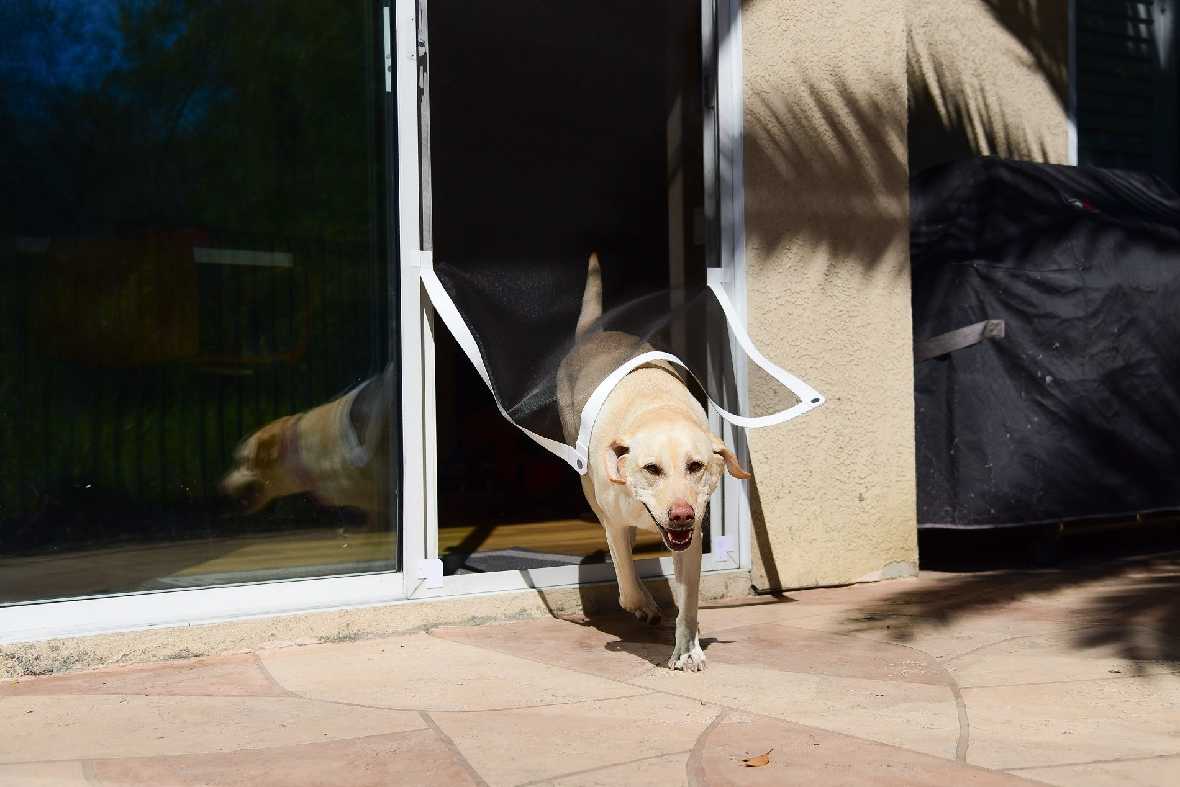
That’s what the screen conversion kit is here to solve. The screen conversion kit includes all the parts you need to transform your standard screen door into an entryway for pets. You can still keep bugs out of the house while your dog can have the freedom to explore the outdoors. 

Using the screen conversion kit is simple and easy, and it comes with a variety of benefits, between the high quality of the pet door it makes, to its ease of use, and its aesthetics. 

Why Should I Get A Screen Conversion Kit?

If you’re on the fence about using the screen conversion kit, don’t worry. We know it’s a unique product that you most likely have not seen elsewhere before. While it can be scary to be the first to hop onto a trend, there are plenty of reasons why screen conversion kit is an ideal pet door solution, such as:

  • Versatility with Integrity: Your screen door will retain its primary function of keeping out bugs and debris while simultaneously becoming a durable entry and exit point for your pets.
  • Safety: The screen conversion kit provides a safe, separate entry for your pets, ensuring that they aren't squeezing through gaps or risking injury.
  • Reduced Wear and Tear: The screen conversion kit comes with durable tape that reinforces the edges of the screen mesh, preventing fraying. 
  • Flexibility: This transformation allows your pets the flexibility to move in and out as they please, reducing disturbances for you, especially during odd hours.
  • Cost-Effective: Turning your screen door into a pet flap can be a cost-effective solution compared to purchasing a brand new pet door, especially if you will need to hire a handyman for installation. 
  • Maintaining Aesthetics: By integrating a pet door into the screen door, you maintain the overall look and feel of your home, without the need for drastic alterations.
  • Easy Adaptation: Most pets quickly get the hang of using the flap, ensuring a hassle-free transition with little to no dog training.
  • Increased Physical Activity: A pet door flap promotes more outdoor time for pets, ensuring they get the required physical activity and mental stimulation needed to maintain their physical and mental health.
  • Increased Independence: The pet door flap fosters independence, allowing pets to cater to some of their needs, like potty breaks, without you needing to play doorman. This means you can sleep better and be out of the house more often. 
  • Home Value: Believe it or not, a well-installed pet door flap can be a selling point for potential buyers who are also pet owners, adding a touch of convenience and thoughtfulness to your home's features. And if you need to remove the flap, all you have to do is replace your screen’s mesh. 

So, before you discard the idea, weigh the advantages. A screen door transformation might just be the pet-friendly solution you've been searching for. 

How Do I Install My Screen Conversion Kit?

If you’re ready to take the plunge in converting your screen door into a pet door, have no fear. The screen conversion kit is easy to install, making it the perfect one-day DIY project. 

You can view the full set of instructions here, as well as watch the video below:


Here’s a step-by-step guide:

Parts included with kit:

  •  2 Screen Magnets

  • 2 Frame Magnets

  • 1 Roll of Protective Tape

Tools Needed:

  • Scissors
  • Painter’s Tape
  • A Pencil
  • Screwdriver (Optional)

Pro Tip: For the best results, do a thorough read of the instructions before diving in.

Installation Instructions:

1) Ready Your Screen Door:
Detach your screen door from its track or hinges and set it on a spotless, level surface. If you spot any rips in your screen door, it's crucial to mend or replace them before installing the pet door.

2) Measure Your Furry Friend:
Here's where your pet's dimensions come into play. Measure from the floor to the highest point of their shoulders. Use painter’s tape for marking on the screen door frame. Then, mark a point 5" above the height you measured.

3) Set Up the Screen Magnets:
On the screen's external side, stick the screen magnets to the bottom corners. Ensure a small gap remains between the frame and magnets.

4) Apply The Protective Tape:
Run a tape strip along the bottom edge, ensuring it overlaps the screen magnets but not their faces. Apply more strips on the sides without touching the frame.

5) Double Up On The Tape:
Flip the screen door to its opposite side. Now, reapply tape on this side, aligning it perfectly with the first layer.

6) Strengthen Your Screen Flap:
To reinforce, place horizontal tape strips connecting the top split of the screen to the frame. Turn over the door and repeat.

7) Excise Screen Spline:
Here, you'll create the pet door opening. Carefully take out the screen spline and trim the extra screen material.

8) Fit the Screen Door Back:
Once done, reinstall the screen door. You could also simply prop it up vertically.

9) Affix the Frame Magnets:
Let the frame magnets attract the screen magnets face-to-face. While the flap hangs, apply mild tension and adhere the sticky side of the frame magnets ensuring they close perfectly.

10) Final Touches:
Trim away any superfluous screen material. Alternatively, for added bug protection, let it remain.

Remember: While this process is termed 'easy,' always approach it with patience and precision. The key lies in the details, so take your time and you'll have a pet-friendly screen door in no time.

Considering a More Traditional Route?

If converting your screen door isn't quite your style, there are other options to consider. You can install a pet door directly into your screen mesh.

Some of our favorite, durable doors include the Hale Pet Door for Screens, the PetSafe Pet Screen Door, and the RCR Easy Screen Cat Door. You can find out more about them on our official list of the top screen door pet doors of all time

]]>
https://www.petdoors.com/blogs/dog/home-pet-gate 2023-08-11T09:06:15-07:00 2023-12-06T17:07:17-08:00 Keeping the Peace: Separating Cats and Dogs at Home with a Pet Gate Nick Pullano Are you a family that has both cats and dogs? Does it drive you crazy every time you see your dog trying to get into your cat’s litter box or food? Not only is it unhealthy for your dog to eat your cat’s litter but it is also annoying for your cat as well. Cats frequently like to have their own space and to be left alone more than dogs do. Here’s an inexpensive way to modify some of the best pet gates into an even better pet gate with a pet door in order to separate your dog from your cat’s stuff.

black and white border collie lying down


As a pet owner, separating your dog and your cat is sometimes the best way of keeping order in a crowded home. Knowing where to put litter boxes and cat food is also important. Putting it in an elevated and sturdy place is the best way to keep dogs out of litter boxes and from eating your cat's meals while also putting safety 1st for all members of your home!

This DIY project is effective and also pretty easy, as there is no permanent wall mounts or modifications to a door, wall, sliding door, etc. This project is a great way to give your cat the space they need while keeping “their” room still accessible to people. All you need to do is get an inexpensive dog gate from amazon or any local store that can be installed inside of any door opening or door frame in your house. You can also put it in a hallway if it’s wide enough or use a gate extension to make it work for the space! Don’t forget to set the gate tightly with the pressure mounts (or create your own pressure mounting) so your dog can’t use their nose or paws to push it open.

Make sure your cat can fit through the bars/slats and your dog cannot, and voila – you have a way to separate your cat(s) and dog(s) (without needing a separate cat flap) while keeping it accessible to humans with an open and close feature. If you have a large dog, make sure to also get an extra wide pet gate or an extra tall pet gate as well. Combine with an elevated cat litter box, and you have the perfect solution! Now your dog and cat can have their own play yard areas in your home. Note that you may need to remove a bar/slat on the safety gate, depending on the size of your cat(s). If it’s a mesh-style of gate with steel construction , you can use wire cutters to make a hole for your cat (be careful not to leave sharp edges). You can also paint it or add your own details to make it work with the rest of your own home decor.

woman playing with yellow lab

This solution is not only a great way to make an easy cat door, but it is also a great solution for small dogs too; especially when you don’t want to cut into your doors or walls or purchase a small dog door. Forget dog proof and safety lock litter boxes, and give both your pets their personal space with this "best seller" DIY gate pet door idea!

]]>
https://www.petdoors.com/blogs/dog/puppy-sleep 2023-04-11T15:22:53-07:00 2023-12-07T11:35:37-08:00 Is Your Puppy Sleeping Too Much or Too Little? Here's What to Know Mia Daniele

As any new puppy owner will tell you, these little balls of energy have a seemingly endless supply of enthusiasm for playtime and exploration. But all that energy is only possible because puppies also spend a lot of time sleeping. In fact, puppies need even more sleep than adult dogs. Up to 18-20 hours a day, to be exact.

But why is sleep so important for these little furry bundles of joy? Why is sleep essential for a puppy's health and well-being, and what can you do to help your new furry friend get the rest they need to thrive?

Why Do Puppies Sleep So Much?

Puppies are notorious for their love of sleep, and for good reason: they need a lot of it! In fact, depending on their age, puppies can sleep anywhere from 18-20 hours a day. This is because puppies need all that extra sleep to support their growth and development, both physically and mentally. During sleep, their bodies are hard at work repairing and building tissues, while their brains process all the new information they've learned throughout the day.

As puppies grow older, their sleep patterns change too. At around 12 weeks of age, puppies will start sleeping for longer stretches at night and consolidating their naps during the day. By the time they're six months old, they'll typically be sleeping through the night and taking fewer naps during the day.

What Factors Affect a Puppy's Sleep?

Puppies, like humans, have unique sleep needs that can vary depending on several factors. One such factor is breed and size. Generally, larger breeds tend to require more sleep than smaller ones. For example, Great Danes can sleep up to 20 hours a day as puppies, while a toy poodle may only need 15 hours of sleep per day. However, it's important to note that there can be variations even within the same breed or size category.

Another factor that can affect a puppy's sleep is their activity level. Highly active puppies may need more downtime to recharge, while less active puppies may require less sleep. It's important to note that over-exercising a puppy can also negatively impact their sleep - like humans, puppies need a balance of rest and activity to stay healthy.

One of the easiest ways to increase your puppy’s activity levels is to give them a pet door. Having the freedom to go outside to explore and run around will help them burn off all that excess energy and sleep better overall.

The sleeping environment is also crucial for quality rest. Puppies need a quiet, comfortable, and safe space to snooze. Consider investing in a cozy bed or crate that is the appropriate size for your puppy's breed and age. This can provide them with a sense of security and help them settle down for sleep. It's also important to block out excess noise or light, as these can be distracting and disruptive to your puppy's sleep.

Ensuring that the room is at a comfortable temperature is also key - puppies are more sensitive to temperature changes than adult dogs, so make sure the room isn't too hot or too cold.

By taking these factors into account, you can help your furry friend get the rest they need to grow and thrive.

dog curled up in bed

Signs That A Puppy Is Sleeping Well

If your puppy is getting enough rest, there are a few behaviors that you may notice. One common sign is snoring - just like humans, puppies may snore lightly when they're in a deep sleep. You may also see your puppy twitching or moving their legs during sleep, which indicates they're in the rapid eye movement (REM) phase of sleep. Puppies may also dream during this phase, which can result in cute little yips or barks. Finally, if your puppy wakes up on their own feeling alert and refreshed, this is a good indication that they're getting quality sleep.

To ensure that your puppy is getting the best possible rest, it's important to provide them with a comfortable sleeping environment. A cozy bed or crate that is the appropriate size for your puppy's breed and age can help them feel safe and secure. Try to avoid allowing your puppy to sleep in your bed, as this can disrupt their sleep patterns and make it harder for them to fall asleep on their own.

Sticking to a consistent bedtime routine can also help your puppy get the sleep they need. Try to establish a regular bedtime and wake-up time, and stick to this schedule as much as possible. Puppies thrive on routine, and having a set sleep schedule can help them feel more calm and relaxed at bedtime.

By following these tips, you can help ensure that your puppy is getting the best possible sleep. A well-rested puppy is a happy and healthy puppy!

What To Do If A Puppy Isn't Sleeping Well

Just like humans, puppies can experience trouble sleeping from time to time. There are several common reasons why a puppy may have trouble sleeping, including anxiety, illness, or discomfort. If your puppy is having trouble sleeping, it's important to identify the underlying cause and address it appropriately.

One common cause of sleep disturbance in puppies is anxiety. Separation anxiety, noise phobias, and general anxiety can all make it difficult for a puppy to fall and stay asleep. To help your puppy manage anxiety, consider providing a cozy den or crate where they can retreat when they feel overwhelmed.

You may also want to try playing calming music or using a pheromone spray to create a calming atmosphere. For severe anxiety, consult with your veterinarian about the best options for managing your puppy's symptoms.

Another reason why a puppy may have trouble sleeping is illness. Puppies who are sick may experience pain, discomfort, or other symptoms that make it difficult for them to rest. If you suspect that your puppy is sick, it's important to seek veterinary care as soon as possible. Your veterinarian can diagnose and treat your puppy's illness, which can help them get back to their regular sleep patterns.

two dogs sleeping next to each other

Finally, discomfort can also be a cause of sleep disturbance in puppies. Make sure that your puppy's sleeping environment is comfortable and that their bedding is supportive and appropriate for their size and breed. You may also want to consider using a comfortable and breathable harness that won't interfere with their breathing while they sleep.

Understanding and meeting a puppy's sleep needs is crucial for their health and well-being. By providing a comfortable sleeping environment, prioritizing exercise and playtime, and sticking to a consistent bedtime routine, you can help your puppy get the rest they need to thrive.

Additionally, being aware of common reasons for sleep disturbance, such as anxiety, illness, or discomfort, and addressing them appropriately can help your furry friend get back to their regular sleep patterns.

With these tips in mind, you can ensure that your puppy is getting the best possible sleep, leading to a happy and healthy life together.

]]>
https://www.petdoors.com/blogs/dog/keep-cats-in 2023-03-30T14:20:51-07:00 2023-12-06T17:14:55-08:00 How To Keep Your Cat From Running Out The Door When You Have Dogs And A Pet Door Nick Pullano

If you own both cats and dogs, you may already be familiar with the conundrum of how to let your dog outside while keeping your cat inside. Dogs love the freedom of going outside whenever they need through their pet door just as must as cats love to slip through the flap

It can be dangerous to let your cat outside unsupervised. Indoor cats may not be savvy to all the dangers of the outdoors while an outdoor cat would still be at risk of being hurt by wild animals and moving cars. 

So, how do we keep our feline friends from slipping out the doggie door and causing chaos in the neighborhood?

How To Prevent Your Cat From Using Your Dog's Pet Door

First things first, keep those doors to the outside closed tight unless you're actively watching your cat. Cats are sneaky little creatures and can slip out faster than you can say "meow."

Next up, it's time to train your cat to come when called. Yes, I said train your cat. I know, I know, it sounds impossible, but trust me, it's doable.

Start by choosing a command for your cat to come, like "here" or "come" or even their own name. Then, call their name in an upbeat tone and immediately reward them with a treat when they come to you.

Gradually increase the distance between you and your cat each time you practice this, and over time, your cat will come when called without needing a treat every time. And if they don't come when called, don't chase them down - just wait for them to come on their own terms and reward them when they do.

But let's not stop there - let's keep our cats entertained and engaged so they don't feel the need to make a run for it.

Provide them with a variety of toys, like balls, laser pointers, and catnip toys, and rotate them regularly to keep things interesting. And don't forget about scratching posts or pads - give your cat plenty of options for scratching and stretching so they don't ruin your couch.

If your cat likes to perch, consider getting them a cat tree or window perch so they can relax and observe their surroundings.

Playtime is also crucial for keeping your cat healthy and happy. Set aside time for them to chase toys or play with a fishing-pole-style toy to get their heart rate up and prevent them from becoming overweight.

Last but not least, consider taking your cat outside on a harness and leash so they can enjoy the great outdoors without the risk of running away. It takes some patience and practice, but with the right harness and leash and plenty of encouragement, your cat can learn to walk on a leash comfortably.

cat using endura flap thermo panel

Dog Doors That Keep Cats Out

One way you can prevent your cat from escaping through your dog's pet flap is to get a dog door designed to keep cats out. 

One great option is a High Tech automatic pet door. This door will only open when it can detect a special key hanging off of your dog's collar. That way, cats will be unable to push through the door when you're not looking. Plus, many High Tech owners report that the door's noises are loud enough to scare any curious cat away.

If you're looking for a non-electronic option, we also suggest the Endura Flap pet door. Many customers report that if you get a double flap door or wall mount, the flaps' combined weight will be too heavy for a cat to push open. Some owners even report that the additional magnets that they added to the flap to keep out the cold also made is impossible for their cat to push open.

Please note that while both the High Tech and Endura Flap are said to help keep cats out, there are no guarantees. A particularly determined cat will find a way to slip through either door despite any precautions you may take.  

So there you have it - the keys to keeping your cat safe and secure. Keep those doors closed, train them to come when called, provide plenty of entertainment and enrichment, and take them outside on a leash. And who knows, maybe one day you'll even be able to take them on a hike (but let's not get ahead of ourselves).

]]>
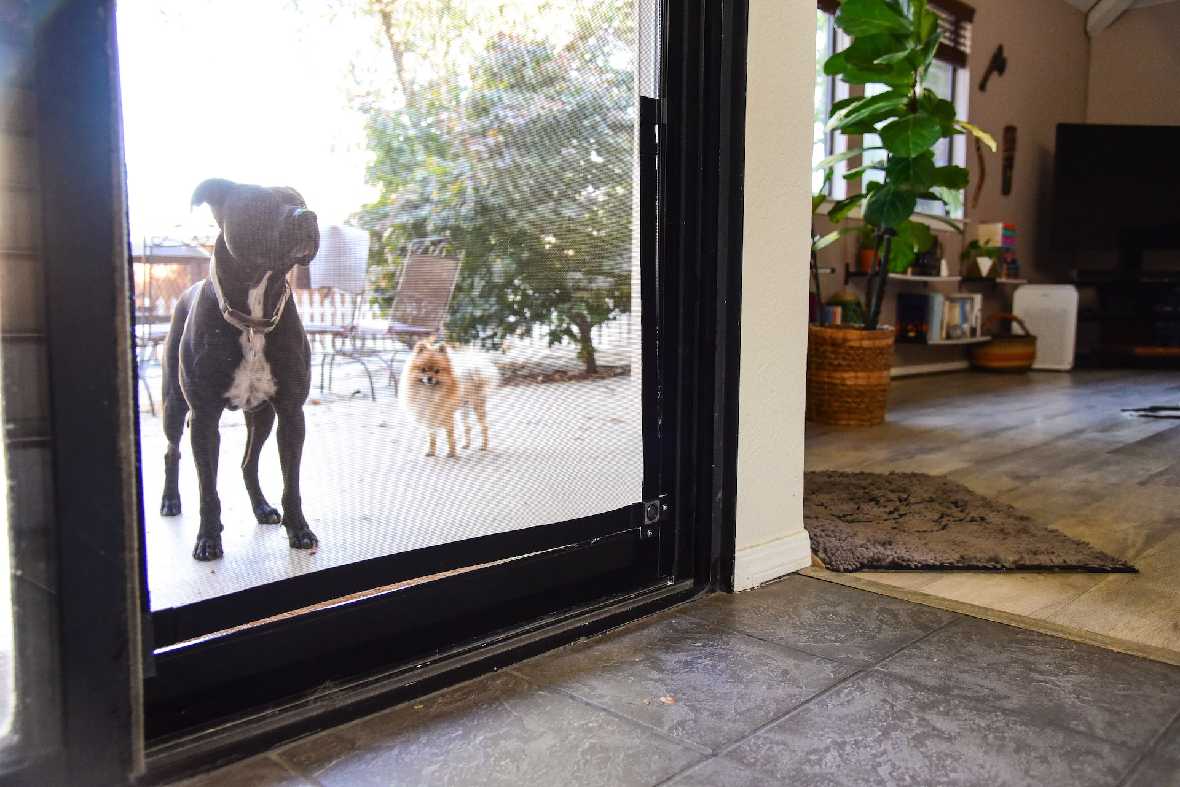
https://www.petdoors.com/blogs/dog/ear-mite-cure-cats 2023-01-12T15:04:09-08:00 2023-12-06T17:02:02-08:00 Ear Mite Treatment for Cats Elizabeth Muenzen Ear mites are surface parasites that live in the ear canals of cats and dogs. They are quite common in cats. Although they are not life-threatening, they can cause irritation and other health complications.  


What are the symptoms of ear mites in cats? 

Unlike internal parasites like tapeworms, ear mites are surface parasites that live on the surface of a cat’s skin and ears. 

There are a few common symptoms to look out for if you suspect your cat has ear mites:

  • Heading shaking
  • Inflammation around the ears
  • Discharge from the ears
  • Red, irritated ears
  • Constant scratching 
  • Dark brown coating in the ear 
  • Drooping ear flap 

How do cats get ear mites?

Ear mites are contagious and can easily spread from one infected animal to another. Outdoor cats and cats in animal shelters are at an increased risk of getting ear mites from another cat or animal. 

Ear mites can also come from contaminated surfaces such as bedding or grooming tools used for an infected cat. 


How to treat ear mites in cats

If you suspect your cat has ear mites, it’s important to take your cat to the vet to determine the cause of their symptoms. 

Your vet will examine your cat’s overall health to rule out any other conditions that may be causing your cat’s symptoms. 

They may take a scraping of the ear to look for mites or eggs. Ear mites are very treatable with systemic or topical solutions, or both. 

In addition to cleaning your cat’s ears with a topical solution, your vet may prescribe one of the following:

  • Selamectin
  • Moxidectin
  • Ivermectin
  • Milbemycin 

If your cat experienced any secondary infections, such as a bacterial ear infection from scratching, your vet will treat that as well. 

It is important to administer systemic treatments for the duration prescribed by your vet, even if symptoms start to clear earlier. It takes about three weeks for ear mites to clear after beginning treatment, sometimes longer. 

Can humans get ear mites from cats?

Humans cannot get ear mites from cats. Ear mites are however contagious to other pets, so it’s important to take all your pets to the vet for treatment and diagnosis if you suspect one pet has them. 

Many vets will recommend treating all pets in the home if one has ear mites, even if they are not all displaying symptoms. 

Want to learn more about your cat’s behavior? Find out why your cat sleeps so much and why they won’t stop meowing

]]>
https://www.petdoors.com/blogs/dog/keep-cat-from-tree 2022-12-09T14:27:17-08:00 2023-12-06T17:14:22-08:00 How to Keep Your Cat Away From Your Christmas Tree Elizabeth Muenzen It’s that time of year again…when the Christmas tree goes up it’s time to figure out how to keep your cat away from it. 

There are a number of steps you can take to deter your cat to keep them safe and keep your tree intact. 

cat sticking tongue out

#1: Use Citrus. Cats do not like citrus scents, so an effective way to keep them away from the tree is to spray it with cat-safe citrus spray. 

If you do not want to purchase a spray, you can even just peel some oranges and place the peels throughout the branches of the tree.

#2: Aluminum Foil: Aluminum foil is another option for deterring your cat. You can wrap some foil around the base of the tree and lay it on the ground around the tree. 

#3: Keep Electric Cords Contained. Dangling cords and lights are a hazard for curious cats who see them as a fun dangly toy. 

Try to push strings of lights deep enough into the tree that they aren’t easy for your cat to play with. Cover any electrical cords on the ground with tape to prevent chewing. 

#4: Secure the Tree. Despite your best efforts to deter your cat, they may wind up by the tree and it’s important to prevent them from pulling the whole thing down. 

Use a heavy tree base that will prevent the tree from getting knocked over. You can even attach the tree stand to a heavy piece of plywood to keep it stable.  

Tip: if your tree base has water in it, make sure it is covered so that your cat doesn't drink from it and get sick. 

#5: Decorate Strategically. Avoid decorating the lower half of your tree with dangly ornaments that look like fun new toys to your cat. 

Any ornaments that are within your cat’s reach should be shatter-proof and large enough that they aren’t a choking hazard.  

#6: Keep Your Cat Occupied. One way to keep your cat away from the tree is to keep them occupied with lots of toys, cat trees, and scratchers of their own. 

Check out the best toys for cats here. You can also take a look at these ways to keep indoor cats happy for more ideas.  

#7: Give Them Some Cat Grass. If you have a fresh Christmas tree it’s important to note that the oil, sap, and resin from evergreens are poisonous to cats. 

Ingesting pine needles is also hazardous as it can cause blockages in their digestive systems.   

To keep your cat from munching on the Christmas tree, try giving them another option like cat grass. Find out here how much cat grass your cat should eat.  

cat sitting on a pole

Ultimately, keeping your cat away from your Christmas tree may prove to be a challenge. 

A great option is to opt for a fake tree and use cat-safe ornaments in the event that your cat gets ahold of them. 

]]>
https://www.petdoors.com/blogs/dog/spotted-cat-breeds 2022-12-01T09:00:02-08:00 2023-12-07T11:39:04-08:00 All About Spotted Cat Breeds Elizabeth Muenzen There are a few domesticated cat breeds with beautiful spotted markings almost resembling a mini-cheetah. Spotted cats are not as common as other colors of house cats.  

orange cat

Spotted cat breeds are often sought after for their beautiful marking and wild appearance. Here are some spotted cat breeds you may have come across:

Bengal Cat

A Bengal cat is a domesticated cat breed from a hybrid of the Asian leopard cat and domestic cats, particularly the Egyptian Mau.

Bengal cats can be traced back to the early 1900s when breeders first cross domestic felines with Asian leopard cats. 

Aside from their markings, Bengals are known for their loyal, caring attitudes and intelligent minds. 

Egyptian Mau

Once revered as a deity by pharaohs, the Egyptian Mau has a distinct spotted coat. These cats have smaller, cheetah-like spots on their coats (whereas Bengals have leopard-like, larger spots).

This breed is one of the few naturally spotted breeds of domestic cats and is considered a rare breed to encounter. 

Ocicat

The Ocicat breed is a breed that originated from a cross between a Siamese cat with an Abyssinian cat. 

These cats have small spots along their coats and rings around their tails, resulting in a wild appearance. They are often affectionate and loyal pets. 

Serengeti

The Serengeti cat was bred in the 1990s to resemble the African Serval cat. However, this breed does not actually have Serval ancestry. 

Serengeti's are a cross between Bengal and the Oriental Shorthair breeds. This breed is athletic, intelligent, and can be quite vocal. 

Savannah

Unlike the Serengeti cat, a Savannah cat actually does have Serval blood. This large and lanky breed has Serval and domestic cat ancestors. They have vibrant spotted coats and a tall build. 

There are various generations of Savannah cats, some with much less Serval influence in their genetics. While more distant generations make great house pets, F1 and F2 first-generation Savannahs are not for beginner cat owners. 

Pixiebob

The Pixiebob is a spotted cat breed resembling a Coastal Red bobcat. This breed originated in Washington state as a cross between various spotted cats and short-tail cats. 

Pixiebobs are stocky and have short, stubby tails. Their coats are typically very similar to a standard brown tabby. 

Interested in learning more about cat markings? Find out if all calico cats are female here. Check out the top female cat names for some inspiration if you’re adopting a new female cat. 

]]>
https://www.petdoors.com/blogs/dog/cats-peanut-butter-ok 2022-11-24T09:00:01-08:00 2023-12-06T16:47:23-08:00 Can Cats Have Peanut Butter? Elizabeth Muenzen While peanut butter is not poisonous to cats, it can cause some severe health issues, especially if it is fed on a regular basis. Peanut butter is high in fat, sodium, and calories, which are unhealthy for your cat. 

cat sticking tongue out

Cats are obligate carnivores, meaning their diet consists mostly of meat and they have little to no need for carbohydrates in their diet. Human treats like peanut butter offer no nutritional value to a cat’s diet. 

Peanut butter is high in trans-fatty acids that keep it shelf-stable. This type of fat is not healthy for a cat, particularly a cat who is already overweight. 

The high sodium and calorie content in peanut butter also makes it unhealthy for cats to consume. Additionally, peanut butter poses the following health risks for your cat: 

  • Allergies: That’s right, just like humans can be allergic to peanut butter your cat can be, too. The severity can vary from itchy skin to anaphylaxis. 
  • Stomach upset: Peanut butter can cause diarrhea, vomiting, and stomach discomfort in cats. 
  • Xylitol poisoning: Some peanut butter options have xylitol instead of sugar. Xylitol is extremely toxic to animals so it’s important that your cat never consumes peanut butter that contains this harmful additive.  


If you want to give your cat some tasty treats straight from your kitchen, here are a few alternatives to peanut butter:


  • A piece of cooked lean meat such as beef, chicken, turkey, or lamb. Make sure it is fully cooked and unseasoned. 
  • A piece of plain, cooked fish. 
  • A small portion of cooked egg (scrambled or boiled). 


Ultimately, peanut butter is not a safe treat for your cat. If you suspect your cat consumed some peanut butter and they are exhibiting any side effects, contact your veterinarian right away. 

Want to learn more about cats? Check out these articles: 

]]>
https://www.petdoors.com/blogs/dog/the-top-female-cat-names 2022-11-17T09:00:04-08:00 2022-11-17T09:00:04-08:00 The Top Female Cat Names Elizabeth Muenzen There are lots of decisions to make when you get a new cat: what to feed them, which litter box to get, and which vet to take them to. 

The decision of what to name your cat can prove to be a tough one. You may choose to stick with the name they came with, or maybe it doesn’t fit their personality. 

We’ve put together a list of the top adorable female cat names for some inspiration:

  1. Luna
  2. Bella
  3. Maddie 
  4. Lily
  5. Lucy
  6. Daisy
  7. Sasha 
  8. Lola
  9. Cleo
  10.  Chloe
  11.  Sophie
  12.  Zoe
  13.  Molly
  14.  Ginger
  15.  Rose
  16. Roxy
  17. Lady
  18. Tessa 
  19. Violet
  20. Trixie
  21.  Scout
  22.  Sierra
  23.  Muffin
  24.  Olive
  25.  Peaches
  26.  Penny
  27.  Piper
  28.  Zillow
  29.  Yara
  30.  Winter
  31.  Xena
  32.  Taylor
  33.  Madison
  34.  Zen
  35.  Snow
  36.  Lacy 
  37.  Pepper
  38.  Raven 
  39.  Ruby
  40.  Iris 

We hope this helped give you some inspiration on what to name your female cat. Wondering if you should get a pet door? Check out the best cat doors of 2022

If your cat is indoors only, here are some ways to keep an indoor cat happy

]]>
https://www.petdoors.com/blogs/dog/self-clean-litter 2022-11-11T09:00:01-08:00 2023-12-07T11:37:11-08:00 Self-Cleaning Litter Boxes for Cats Elizabeth Muenzen Cats are wonderful and relatively low-maintenance companions. However, many cat owners will agree that scooping litter boxes is not the most enjoyable aspect of their care. 

You may have heard that there is such a thing as a “self-cleaning” cat litter box. But what does that really mean and is it a good idea to get one for your home? 

We’ll discuss the pros and cons of self-cleaning cat litter boxes so you can decide if it’s the right choice for you.

two cats

What is a Self-Cleaning Litter Box?

An automatic self-cleaning cat litter box detects when your cat has used the litter box and scrapes the litter to clear away any waste. 

Typically, the waste is pushed into a drawer beneath the space where your cat goes. Some options even indicate when the drawer is full and needs to be emptied.    

Pros of Self-Cleaning Litter Boxes:

  • Cleans your cat’s waste if you are away all day and not there to scoop it yourself 
  • No more scooping smelly cat litter
  • Options from different brands to fit your budget 
  • Immediate cleaning keeps home smelling fresh 

Cons of Self-Cleaning Litter Boxes:

  • Expensive 
  • Prone to malfunction 
  • Noise can scare cats
  • Reduced chance of noticing health issues

As detailed above, self-cleaning cat litter boxes are great for eliminating the need to manually scoop litter. However, you’ll still need to clean the litter box and replace the litter periodically as recommended by the manufacturer for the brand you purchase from. 

This can be a great option for multi-cat households because the automatic litter box cleans waste away immediately so the box is always fresh for the next cat. 

It’s also a convenient choice if you have long work days or are away on a trip and can’t scoop the litter box multiple times per day. 

However, one thing to keep in mind with automatic self-cleaning litter boxes is that you won’t see your cat’s waste, which can often be an indicator of any health issues. 

For instance, if your cat has tapeworms or another intestinal parasite one of the key steps is examining feces to check. It’s also important to know the state of your cat’s waste to know if they are experiencing digestive upset and need to see a vet. 

Self-cleaning cat litter boxes also range from $150 - $500, so they are typically not a budget-friendly option. Additionally, the noise they make while scooping can also scare some cats and prevent them from using the litter box. 

Ultimately, the choice of whether or not to invest in a self-cleaning litter box will come down to your unique station and needs. Check out some more ways to keep your indoor cat happy here. 

]]>
https://www.petdoors.com/blogs/dog/stop-cat-meowing 2022-11-04T09:00:01-07:00 2023-12-07T11:40:49-08:00 Why Won’t My Cat Stop Meowing? Elizabeth Muenzen Excessive meowing in cats can be the result of a number of different factors. Whether your cat is hungry, afraid, bored, or sick, it’s important to address the root cause of the meowing. 

two cats side by side

 Here are some reasons for excessive meowing in cats:


Attention Seeking

Meowing is a basic form of communication for cats. If your cat is following you around and meowing, they may be seeking attention. If you notice this behavior when you are occupied with work or other tasks, then attention-seeking may be the cause of your cat’s meowing.  


Boredom

Sometimes cats will meow constantly out of boredom. If you suspect this is the reason for your cat’s meowing, check out these ways to keep your indoor cat happy. Creating a rich indoor environment helps keep your cat occupied with toys and cat trees. 


They Want You to Feed Them 

A common cause of meowing in cats is begging for food. Work out with your vet to determine if you're feeding your cat the right amount.

A great option for cats who often beg for food is to use puzzle toys for treats or food. This slows down their eating and makes meal or treat time more engaging. Preventing overeating is very important to keep your cat at a healthy weight. 


They Want to Go Outside 

Indoor cats will often meow when they want to be let out. A cat door is a great way to let your cat come and go on their own terms and to minimize meowing to be let outside. If your cat is indoor only, you can always leash train them to get them out for some fresh air. Providing some cat grass is also a great way to bring a taste of the outdoors inside. Find out here how much cat grass your cat can eat


Health Concerns

If you’ve ruled out boredom, attention seeking, and other correctable issues and your cat is still meowing excessively, it’s probably time for a trip to your vet. Taking your cat to the vet to rule out any health issues is very important if this behavior starts suddenly or persists for a long time. Stress and aging are common causes of meowing in cats. 

Make sure you don’t ignore you cat if they are meowing constantly. Once you get to the root cause, you can correct the issue or treat them for any underlying health problems. 

]]>
https://www.petdoors.com/blogs/dog/the-best-toys-for-cats 2022-11-01T09:00:06-07:00 2022-11-01T09:00:06-07:00 The Best Toys for Cats Elizabeth Muenzen It’s important to play with your cat frequently to exercise their mind and body. A big part of keeping indoor cats happy is providing them with a variety of toys.

two cats side by side

With so many options out there, it’s hard to know which toys are the best. Here are some great cat toy options for your feline friend:


Catnip-Filled Toys: Catnip is a leafy green member of the mint family. Some cats (though not all) respond to the Nepetalactone in catnip when they smell it in a plush toy. Catnip-filled toys encourage couch potato cats to run, chase, and pounce. 


Learn more about what catnip does to cats


Wand Toys: Wand toys are a staple cat toy option. They are perfect for getting your cat up and moving around the house for some good exercise. Wand toys come in lots of varieties and colors so you can choose your favorite. 
Find out here if cats can see color


Cat Grass: While not a toy in the traditional sense, cat grass is a great way to enrich your cat’s life. You can buy cat grass at the pet store or you can grow it yourself! You’ll likely see your cat take a few bites of the leafy grass. Not to worry, cat grass is completely safe for cats. 


Here’s how much cat grass a cat should have


Food Puzzles: Food puzzle toys are a great way to slow down fast eaters. They’re also a great way to keep your cat’s mind sharp. In the wild, cats have to work for their food. Using a food puzzle is a great way to emulate this process and cater to your cat’s natural instincts.

]]>
https://www.petdoors.com/blogs/dog/calico-cats-female-truth 2022-10-28T10:30:00-07:00 2023-12-06T16:40:05-08:00 Are All Calico Cats Female Elizabeth Muenzen A calico cat is a domestic cat of any breed with a tri-color coat. A calico coat is typically white, orange, and black but could have three different colors in its coat. 

calico cat

If you’ve met a calico cat before chances are it was a female. There’s a common conception that all calico cats are female. Is this really true, or is it an old wive’s tale?


The answer boils down to genetics. Orange coloring in cats comes from a gene in X chromosomes. Males have XY chromosomes and females have XX chromosomes, so realistically either a male or female cat can have orange coloring. 


However, female cats are commonly calico, tortoiseshell, or orange tabbies whereas males are typically solid orange tabbies. Excluding rare cases, only cats with an XX chromosome can be calicos or torties. That’s why there are so many male orange tabbies and so many female calicos and torties. 


Are calico cats ever male? Although it is rare, it is possible for a male cat to be calico. According to a study by the University of Minnesota College of Veterinary Medicine, only around 1 in 3,000 calico cats are male. 


In rare situations, a male cat will have three chromosomes, XXY. This condition leads them to have calico coloring because they have the two necessary X chromosomes. Male cats with XXY chromosomes are known as Klinefelter males (named after the endocrinologist Henry Klinefelter who discovered this condition in the 1940s). 


A tortoiseshell color male cat would have the same chromosomal makeup. The condition remains so rare because the majority of afflicted cats are sterile, so they cannot pass the genetic trait onto their offspring. 


Want to learn more fun facts about cats? Check out the articles below:


]]>
https://www.petdoors.com/blogs/dog/best-hypoallergenic-dogs 2022-10-25T09:00:01-07:00 2023-12-06T16:37:29-08:00 The Best Hypoallergenic Dog Breeds Elizabeth Muenzen It can be a huge challenge if you love dogs but suffer from allergies. Luckily, there are some great hypoallergenic dog breeds that are perfect for this scenario. 

Hypoallergenic dog breeds generally shed less than other breeds. They also typically have curly coats that trap hair and dander so that it sheds less into the environment. We’ve got you covered with a list of the best hypoallergenic dog breeds for people with allergies:

  • Bichon Frise
  • Schnauzer
  • Yorkshire Terrier
  • Portuguese Water Dog
  • Poodle
  • Maltese
  • Shih Tzu
  • West Highland Terrier
  • Irish Water Spaniel 
  •  Lhasa Apso

  • The above dog breeds would make great companions for anyone with allergies. Regular baths and haircuts will also keep shedding and dander down to improve allergy symptoms. 

    Just adopted a new pooch? Here’s when you should start training your dog

    ]]>
    https://www.petdoors.com/blogs/dog/is-yogurt-good-for-dogs 2022-10-21T10:30:05-07:00 2022-10-21T10:30:05-07:00 Is Yogurt Good for Dogs Elizabeth Muenzen Yogurt is a tasty snack for people to enjoy. You may have caught your dog looking longingly at you while you enjoy some yogurt and wondered if they can have a taste. 

    yellow lab smiling

    Most dogs can safely eat yogurt, but that doesn’t necessarily mean that they should. Yogurt is not toxic to dogs but it does contain lactose. 


    Many dogs are lactose-sensitive or lactose intolerant, meaning they have trouble digesting lactose-containing products like milk and yogurt. However, some will tolerate a small amount of yogurt just fine. 


    Health Benefits of Yogurt for Dogs 


    For dogs who tolerate lactose, there are some health benefits of yogurt. It is high in calcium and protein for stronger bones. It can also act as a probiotic which helps ease the digestive system.


    If you give your dog yogurt, make sure it is plain Greek yogurt and doesn't have any added sweeteners. Xylitol is a common additive to yogurt and it's toxic to dogs. Flavored yogurts are also not a good option for dogs.


    In general, small dogs can have about a spoonful of yogurt every now and then as a treat. Larger dogs can have one to three spoonfuls per serving.    

    dog in front of hale pet door

    Risks of Yogurt for Dogs 


    The main risk of giving yogurt to your dog is that they will have some digestive upset. Lactose can cause diarrhea, gas, and vomiting for dogs. Yogurt is also high in fat, so if you are feeding it as a regular treat, your dog may be getting too much fat in their diet to maintain a healthy weight. 


    Additionally, lots of yogurts have additives like Xylitol that are not dog-friendly. It’s best to start with a small amount to first see if your dog tolerates it.


    It’s always important to discuss additions to your dog’s diet with your vet before making any changes. 


    Want to learn more about what your dog can eat? Find out if strawberries are good for dogs and if cinnamon is bad for dogs

    ]]>
    https://www.petdoors.com/blogs/dog/dog-safe-candle 2022-10-18T09:00:01-07:00 2023-12-06T16:58:27-08:00 Is It Safe to Burn Candles Around Dogs? Elizabeth Muenzen There’s nothing better than getting cozy during the fall months with some candles. While candles may seem harmless, they are not without risk if you live with dogs. 

    woman throwing ball for dog

    While candles generally don’t pose a significant health risk for dogs, there are a few hazards to be aware of. If you have a candle, they may:  

    • Get knocked over by your dog if placed on a low surface 
    • Contain irritating or harmful chemicals 
    • Exacerbate respiratory problems like asthma

    Luckily, there are a few things you can do to safely burn candles around your dog. Always place candles on tables and counters that your dog cannot access or bump into. It’s important to be physically present when you have a candle burning. 

    Additionally, choose a candle that is made from natural, pet-safe ingredients. Unscented candles made from soy, beeswax, or vegetable wax are a great option to keep your dog safe. A lightly scented candle will typically be okay, but avoid these scents that dogs hate

    If your dog has asthma or another respiratory condition, it’s best not to burn candles at all. Switching over to LED candles is a great option for a similar ambiance without the risk of irritation.

    ]]>
    https://www.petdoors.com/blogs/dog/do-dogs-smile 2022-10-14T10:03:37-07:00 2022-10-14T10:03:37-07:00 Do Dogs Smile? Elizabeth Muenzen A happy dog often looks like they’re grinning ear to ear. Is your dog really smiling? And does it mean the same thing it does as when humans smile?

    yellow lab smiling

    Determining whether dogs smile requires understanding canine emotions. Thanks to MRI technology, we now know that dogs do experience emotions—often in very similar ways to humans. 


    Research has shown that dogs experience an increase in oxytocin when their people pet them. Oxytocin is a hormone that is released and has soothing effects. Oxytocin has a similar effect on people and dogs, so we know that dogs experience these feel-good emotions in a similar way. 


    Do Dogs Smile?


    Although dogs experience emotions, they don’t exhibit them in the same way as humans. Dogs don’t necessarily smile the same way people do. However, there is certain body language in a dog that can be equated to a smile.


    A dog’s smile will display relaxed facial muscles and posture. Their mouth will often lift slightly and their eyes will squint slightly. This is often accompanied by a wagging tail. 


    Many animal behaviorists recognize a dog’s smile as an adaptive facial expression that is encouraged by people. When your dog smiles, there is often a positive reaction: treats, peets, laughter, and attention. This encourages your dog to exhibit the same expression when they are feeling happy and calm in the future. 

    yellow lab in grass

    Canine Body Language 


    So it seems dogs really do smile! 


    However, decoding a dog’s emotions requires looking at their body language too, and not just their teeth. In fact, dogs will bear their teeth out of aggression or submission, which is not the same as a happy smile. 


    When a dog greets another dog they like, they’ll often do a full-body wag, wiggling back and forth and displaying a happy, smiling face. The same can be said when a dog greets their favorite human. When dogs smile at us we also smile back, reinforcing the behavior. 


    Want to get your dog smiling? Here are 10 tips for being a great pet owner and 5 ways to improve your dog's health

    ]]>
    https://www.petdoors.com/blogs/dog/cat-sleep-reasons 2022-10-13T22:38:38-07:00 2023-12-06T16:44:02-08:00 Why Do Cats Sleep So Much? Elizabeth Muenzen Ever wondered why your cat spends so much time sleeping? On average, cats sleep 12-16 hours per day. Plenty of cats sleep even more than this—kittens can sleep up to 20 hours per day!

    two cats sitting side by side

    So why exactly do cats sleep so much? Most of it boils down to their instincts. One of the main reasons cats get so much shut-eye is to store energy. Cats are stalk-and-rush hunters, meaning they are active in short bursts when hunting. After a meal, they typically nap and then get back to it. 


    Unlike humans who sleep a full eight hours at once, cats take shorter but more frequent rests throughout the day. A lot of energy goes into hunting in the wild. Although domestic cats aren’t hunting, the urge to rest up for bursts of activity is hardwired into their genetics.


    Cats are also very alert to their surroundings even when they’re asleep. Even though they appear to be in a deep slumber, you may notice their ears twitching in response to a nearby sound. Learn more about your cat here:

    ]]>
    https://www.petdoors.com/blogs/dog/prevent-cat-escape 2022-10-13T16:52:23-07:00 2023-12-07T11:33:36-08:00 How to Prevent Indoor Cats from Escaping Elizabeth Muenzen While some cats are content surveying the great outdoors from the safety of a cozy window perch, others are determined to experience it firsthand. Unfortunately, this means a lot of frustration and worry for any cat owner with an escape-artist kitty.

    This article covers some tips & tricks for when your indoor cat keeps trying to escape, including: 

    • Why cats try to escape
    • Preventative measures
    • Safety precautions
    cat

    Why Indoor Cats Try to Escape

    Have you ever wondered, "why does my cat want to go outside?” Has your cat's escape attempts ever made you wonder "is my indoor cat happy?" 

    Don’t worry. It’s completely natural that your indoor cat wants to go outside. However, the outdoors poses a number of risks for cats, including busy streets and wild animals. Here are some reasons why a cat might try to escape:

    Searching for prey:

    Cats are natural hunters, so it’s not unusual for them to look outside for something to chase. If you have a cat in search of prey, escape attempts could become a common occurrence.

    Assessing their environment:

    Similar to their natural tendency to hunt, cats also like to assess their surrounding environment for mates or potential dangers. If your cat is not fixed, this tendency may be amplified, so we recommend spaying or neutering your cat.

    Curiosity:

    Plain-old curiosity is reason enough for a cat to try and explore what lies outside of the front door. Naturally, cats will want to know where you’re off to when they see you step outside, increasing the chance that they’ll follow suit.

    multi-colored cat looking out of cat door

    How to Prevent Cats from Escaping

    Understanding the reasons why your cat wants to escape is the first step towards learning how to keep a cat indoors. Below, we’ll discuss a few preventative measures that explain how to stop a cat from going outside.

    Create Barriers:

    If possible, try to block access to your cat’s preferred escape route. A tall indoor enclosure is a good option. While most cats will be able to jump over it, the walls will buy you some time to get through the front door before your cat can slip out behind you.

    If your cat is escaping constantly, getting them spayed or neutered might be necessary. When a young cat suddenly wants to go outside, it could be because they are searching for a mate (this is particularly true for male cats). Once you rule this out, it’s time to start behavior training:

    • Clap your hands when you see your cat clawing at the door to get out, making the doorway seem as unappealing as possible. Be sure to stop as soon as you see your cat walking away from the door and reward them with a treat.
    • To keep your cat away from the door, try Motion-Activated Pet Deterrents—orange or lemon sprays work well, as most cats do not like the smell of citrus.
    • Place some aluminum foil along the doorway area. Many cats find the feeling of walking on it unpleasant and will steer clear.

    Distraction:

    If you struggle with your cat slipping out behind you as you leave for the day, finding something to distract them is a great idea. Here are a few suggestions:

    • When you leave your house, try guiding your cat away from the door with a laser pointer, or throwing a toy into another room to occupy them.
    • Make staying inside more appealing with lots of treats, toys, and comfy hideaways in rooms far away from any exit points.
    • Hang bird feeders next to a window perch so your cat can enjoy the excitement of the outdoors from the safety of your home. 
    grey cat eating a cold treat

    Try a New Feeding Schedule:

    Strategically adjusting your cat’s feeding schedule combines behavior training and distraction. Try feeding your cat as soon as you leave in the morning and right when you get home for the day. This distracts them as you step out the door and gives them an incentive to stick around for dinner when you get back home.

    Allow Limited Outdoor Time:

    If you’re comfortable with your cat having some outdoor time, letting them out for a few hours a day is a good way to reduce escape attempts.

    • Try a harness and leash to safely take your cat outside. Make sure to take them out through one designated door that they can associate with outdoor time (to prevent them from dashing out every door they see).
    • Any DIY-enthusiasts out there? Consider building a catio! A catio is a safe outdoor enclosure for cats that you can fill with cat trees and toys. 
    • If your home already has an outdoor screen enclosure, that can be a great place to let your cat explore.
    grey cat using cat door for screens

    Install a Cat Door

    If you find that your cat escapes, but always comes back home a few hours later, it might be worth considering an indoor-outdoor lifestyle for them. Installing a cat door is a great way to allow your cat outdoor access at designated times.

    Here are some of our recommendations:

    CatMate Elite 305 Super Selective Cat Door:

    cat mate elite super selective cat door


    The CatMate Elite Super Selective Cat Door is perfect for cat owners who want to control access to the door. It features timer control for up to nine cats for customizable entry and exit—perfect for keeping one cat in while letting another out. The LCD screen displays the location of up to three cats and the time that they entered or exited the house.

    Teaching cats to use a cat door isn’t always easy! Once you’ve found the perfect cat door for your home, see how to train your cat to use a cat door.

    multi-colored cat coming out of endura thermo sash cat flap

    Safety Precautions

    In the event that your cat escapes, it’s important to be prepared with a few safety measures:

    • Make sure your cat has a collar with their name and address. It’s also a good idea to get your cat microchipped just in case they lose their collar.
    • Ensure they stay up to date with vaccinations and regular vet checkups.
    • If you choose to let your cat outdoors, take a look at some springtime safety tips for outdoor pets.

    We hope these tips helped explain how to keep your cat from escaping and how to safely allow them some outdoor time with a cat door. Show your feline friend some extra love today!

    ]]>
    https://www.petdoors.com/blogs/dog/pet-friendly-decorations 2022-10-13T16:51:40-07:00 2023-12-07T11:26:50-08:00 Tips for Pet-Friendly Holiday Decorations Nick Pullano The holidays are an exciting time for everyone! Trimming trees, hanging mistletoe, the sweet scent of cookies, and other delicious baked goods lingering in the air and so much more. There are several precautions, however, that need to be taken in order to keep your precious pets safe and happy this holiday season. Whether you own cats, dogs, or other types of pets, it is important to ensure that your home is pet-friendly during this festive time of year. That's why we've compiled a list of holiday safety tips for every pet parent who wants to keep their pets safe during the happiest time of the year.


    Mav and Loki in a great dog santa costume and dog christmas outfits posing for dog christmas photos

    Pet Friendly Holiday Decoration Tips: 

    1. Avoid tinsel and imitation snow. This can cause serious internal irritation for cats and dogs if ingested.
    2. Skip the holly berries. These innocent berries are potentially toxic if consumed in large quantities by a curious pet and can lead to significant medical complications.
    3. If you have cats, avoid having poinsettias in your home. While these beautiful red flowers bring Christmas cheer to any room, they are anything but cheerful for the felines in your life. These flowers are poisonous and cats can become very ill (even to the point of kidney failure) if they eat them. If someone does give you this holiday plant, keep it out of reach so your pets are not at risk. If your cat ever eats a toxic plant, call the ASPCA animal poison control center immediately. Learn more about 
    4. Many people use strings of popcorn and candy canes to decorate their Christmas trees, but as a pet owner, you should make sure these decorations are high up on the tree where it's out of your pet's reach. It is never a good idea for pets to ingest human food as it might make their stomach upset at best and cause intestinal obstruction at worst. This doesn't mean they have to miss out on all the fun though! Gifts for dogs can be as simple as a packet of their favorite treats!
    5. Properly secure your Christmas tree. Your playful puppy and frisky kitten are not going to stop frolicking just because you have a tree in your home. A pet-proof Christmas tree is a must for the holidays, or else a fallen tree might lead to broken ornaments, pine needles everywhere, and split tree water. For a dog and cat safe Christmas tree, secure or anchor the holiday tree stand to the wall or floor. It's no surprise that puppies and Christmas trees don't mix! Consider blocking your tree off with an indoor enclosure to keep your pup (and your tree!) out of harm's way. A cat-friendly Christmas tree requires a little extra effort because they might try to climb up it, so make sure you work to prevent this.
    6. As the snow gently falls outside and the holiday music plays in the background, candles provide the perfect touch to the holiday ambiance in your home. Pet owners, however, need to make sure that all open flames are high up so that pets do not accidentally knock the candles over or burn themselves while walking by. Make sure your cats and dogs stay far away from your menorah or kinara.
    7. Cats love to climb and may want to treat your beautifully decorated Christmas tree as their own personal jungle gym. They will probably break your glass ornaments, which is why providing cats with an alternative climbing tree is a great idea! There are many different cat tree options available for purchase, or you can even make your own if you are a DIY kinda person. With their own tree, your cat will be less tempted to climb the "person" Christmas tree and knock down your very breakable ornaments.
    8. Make sure that your Christmas lights are out of reach. If your pet chews on the electrical cord, they can be at a serious risk of electrocution. You can also check out electrical cord guards that will protect your holiday lights and pets from disaster.

    The holidays are a special time of year, and following holiday pet safety tips will make sure that your pets will get to enjoy the season as well. By putting in a little extra effort during the decorating process with these pet-friendly holiday decorations, you can ensure that your furry friends remain safe, happy, and warm well into the new year.

    But enough about what NOT to do. Remember your dog or cat as you are picking out holiday gifts – every family member enjoys a special treat or a new toy once in a while. Plus, cat and dog presents are the most fun to shop for! Some of the best Christmas gifts for your dog are as simple as a pack of their favorite treats or an extra-special bone. And you get to decorate it in wrapping paper too!

    A fun way to celebrate Christmas with your pets is to dress them up in cat or dog Christmas outfits. A dog Santa Costume is an absolutely adorable way to celebrate the holiday spirit, just make sure your pup is comfortable! Don't forget to take some dog Christmas photos like the one above to commemorate the special time. However you choose to celebrate, we would like to wish you and your pets a very happy holiday season!

    As the holiday season gets closer, the weather gets colder! If your pet isn't blessed with a natural sweater, you can consider getting them a sweater for the chilly winter days!

    ]]>
    https://www.petdoors.com/blogs/dog/stop-dog-chasing-cat 2022-10-13T16:51:04-07:00 2024-12-02T14:30:22-08:00 How to Stop a Dog from Chasing Cats Nick Pullano

    Most dogs experience the urge to chase cats, especially breeds with strong drives to pursue what they consider as prey (aka: small animals). For other dog breeds, they are overcome with their desire to play, often wrongly assuming that cats love to play tag and roughhouse as much as any other canine. However innocent your dog’s intentions may be when chasing cats, the pursuit causes stress and fear for our feline friends. Similarly, it also poses a threat to the dog, as the cat may claw in defense. We don’t want any scratched eyes or noses!

    It is best to start training for good behavior when your new dog is still a puppy if you have the chance, but we all know that this is not always the case. From adopting rescue dogs to introducing a cat into the family after your dog has reached adulthood, the opportunity is not always available. Regardless of the situation you are in, the following training tips are some of the most successful tactics for ensuring the safety and happiness of both cats and dogs. Remember that this is a multi-faceted approach that won’t change your dog’s high prey drive overnight, but is a process that takes time for growth and development.

    If you do have a family cat in the house, then it is important to make sure that they have a safe place to go to when they are feeling stressed or need a time-out. Cat towers or smaller cat doors that lead outside or to a separate room are great safe areas for cats. This way, your dog is not always in the presence of the cat, and you cat has a place to escape to until your dog start exhibiting calm behavior.

    For times with limited pet supervision, it is recommended to use a playpen, exercise pen, or other indoor enclosure to separate the dog and cat, making sure that your cat avoids any stressful situations and your dog does not have the opportunity to misbehave. This is especially important if you have a new puppy who has yet to see a certified professional dog trainer or another dog behaviorist.

    Redirecting Behavior:

    According to animal behavior consultants, one of the most prominent indicators of initiating a chase is staring. If your dog is intently staring at the cat, there is a pretty high chance that they want to bolt after the cat. Keep an eye out for staring, because stopping the process as early on as possible is crucial in long term behavioral change.

    As soon as you catch your dog staring, or making any other initiative notions such as whining or growling, get their attention by clapping your hands, whistling, and/or calling your dog’s name. This will help divert the attention away from the cat and shift the focus towards you.

    Upon your dog’s attention toward you, make sure to reward them with praise and even a delicious training treat. Positive reinforcement is more effective than discipline in these cases, because dogs are more likely to stick to behavior that produces rewarding outcomes.

    “Leave It” - A Positive Reinforcement:

    If your dog has had any obedience training in the past, the “leave it” trick can be one of the most beneficial voice commands to prevent chasing. This tactic involves a two-step process. First, begin training with a treat in each hand, preferably of different types. Let your dog smell one of your hands so that they know the treat is there, ready to be eaten. Ignore their attempts to get the treat, saying “leave it”, until they stop begging for it. Once your dog has stopped pursuing the treat, reward them with praise and hand them the treat that was in your other hand. Make sure not to give your pet the treat that they previously smelled, as it will teach them that they will eventually get the thing that they were told to “leave.”

    Once your dog has mastered the “leave it” trick with treats, you can begin to implement this tactic to teach your dog to stop chasing cats. Make sure that you supervise this, keeping a leash on your dog in the case that they do attempt to chase the cat. Have treats on hand to reward your dog for leaving the cat alone. When your dog expresses interest in chasing the cat, or the cat reacts in a way that might provoke your dog, use the command. The end goal is that your dog will want to obey the command in order to be rewarded, serving as positive reinforcement in their relationship with you, as well as with the cat.

    Clicker Training - Another Positive Reinforcement Technique:

    Dogs tend to associate actions with positive or negative consequences, which is the basis for understanding how clicker training works. The clickers allow your dog to divert their attention away from the cat and instead focus their attention on you. Start by letting your dog smell the clicker. Then click it and give them a high-value treat in order to show them that the clicker offers a reward.

    Every time your dog displays the urge to chase a cat, use the clicker and immediately reward your dog with a treat as soon as they turn their attention toward you. The timing in this is key, because your dog needs immediate positive reinforcement to ensure that they understand why they are being rewarded.

    For best results, start with keeping your dog on a leash to manage their behavior as well as keep your cat safe. Once the cat has entered the room, begin the training. If your dog does not respond to the clicker, your cat may be too close. If the cat is a greater distance away from the dog, the training process will be easier for your dog to get the hang of.

    After a few days of dog training, your dog will gradually begin to view the clicker as a far more interesting subject than the cat, as the clicker lends itself to reward. As soon as the mindset of “obtaining a reward” is in place, your dog’s view of chasing the cat will shift, as there is not a positive effect as a result of the action. You can then try it out with your dog off-leash.

    For the Slip-Ups:

    Our dogs aren’t perfect, so there may be times when chasing the cat still occurs. In the case that this does happen, one way to resolve this issue is to temporarily isolate your dog in another room immediately after they chased. Without saying anything, put them in a room by themselves for a few minutes so that they are aware that this is the consequence for acting out. No need to keep them in there for very long—just enough time to ensure that chasing cats will not be tolerated.


    ]]>
    https://www.petdoors.com/blogs/dog/are-strawberries-good 2022-09-09T11:00:00-07:00 2023-12-06T16:35:26-08:00 Are Strawberries Good for Dogs? Elizabeth Muenzen Strawberries are a great low-calorie treat for your dog to enjoy. Before giving your dog any new foods, check with your veterinarian to see if they have any concerns.

    dog smiling at camera

    Health Benefits of Strawberries for Dogs

    Strawberries have lots of fiber, antioxidants, and vitamin C. They are low in calories, so they can be given as a sweet treat to dogs who are overweight. In fact, fresh fruit may help slow the aging process and strengthen the immune system, making them a great tool for long-term weight management.

    Strawberries also contain malic acid an enzyme that can help whiten your dog's teeth and freshen their breath.

    How Many Strawberries Can Dogs Eat?

    Although they are healthy for your dog, strawberries do contain a lot of sugar, so just make sure to feed strawberries to your dog in moderation. Once you get the green light from your vet, below is the number of strawberries you can typically give to your dog based on their size.

    • Small Dog: 1 strawberry per day.
    • Medium Dog: 3-4 strawberries per day.
    • Large Dog: Up to 5 strawberries per day.

    As with any new food you’re introducing to your dog's diet, start with a small portion to avoid digestive upset and check for any adverse reactions.

    The best way to give your dog strawberries is to thoroughly wash the fruit and cut the stem off. Then cut the strawberry into small pieces to avoid the choking hazard. You can also puree a few frozen strawberries in the blender for a dog-friendly smoothie or to add to your dog's food.

    Be prepared that your dog simply might not like strawberries! There are plenty of smells dogs hate, and strawberries might be on that list for your dog.

    Interested in improving your dog’s health? Check out the benefits of chlorophyll for dogs. Here are five more ways to improve your dog's health.

    ]]>
    https://www.petdoors.com/blogs/dog/kennel-cough-vaccine 2022-09-02T11:00:00-07:00 2022-09-02T11:00:00-07:00 What You Need to Know About the Kennel Cough Vaccine Mia Daniele If you take your dog to a day care or regularly house them in an overnight dog hotel, then you probably have heard of the bordetella vaccine, also known as the kennel cough vaccine.

    dog lying in sun

    Bordetella is a “noncore vaccine” (also known as unrequired) vaccine that is given to dogs that are frequently among other dogs. It’s often required by canine facilities like dog daycare centers, dog parks, boarding kennels, dog shows, and group training classes before your dog can attend them

    The Bordetella vaccine is meant to protect against bordetalla bronchiseptica. Which causes inflammation in the upper respiratory system. This inflammation leads to what we know as kennel cough disease and other secondary infections.

    Kennel cough itself is a term used to encompass many highly contagious respiratory diseases common among large groups of dogs socializing and boarding together. It spreads through aerosol droplets, which can contain toys, bowls, food, and the air your dog breathes. While it is non-fatal, it can lead to long-term health complications for puppies and senior dogs.

    You can often tell that your dog has kennel cough based on their loud, honk-like cough. While that is the most distinctive symptom, infected dogs also suffer from:

    • Runny nose and sneezing
    • Loss of appetite
    • Lethargy
    • Fever

    If you believe that your dog has kennel cough, make an appointment with your vet immediately. The symptoms are similar to canine distemper and canine influenza virus, which are much more serious illnesses. Additionally, your vet may want to have your dog be brought into their office a certain way to avoid exposing other dogs.

    Despite its contagious nature, kennel cough is very treatable. Your dog may be prescribed rest, cough medicine, and antibiotics. The treatment may be more aggressive if you have a puppy, senior dog, or an immunocompromised dog, as kennel cough could potentially lead to worse long-term problems.

    Should I Get My Dog the Bordetella Vaccine?

    Despite being a noncore vaccine, it’s generally recommended that your dog gets it if they are often in contact with other dogs, whether that be on a farm, in the household, or out in public at dog parks, daycare, or boarding facilities, and training classes. All of these put them at risk of contracting kennel cough.

    Generally, dogs need the bordetella vaccine annually with some facilities requiring one that was administered less than six months ago. Ask your veterinarian what your options should be.

    Additionally, while there are no harmful side effects to the vaccine, your veterinarian may recommend holding off if your dog is immunocompromised, sick, or pregnant. Like with humans, any of these conditions can lead to your dog suffering from an adverse reaction to the vaccine.

    ]]>